Snagging a New Dubai Apartment from Abroad: A Handover Inspection Checklist
Quick Answer: How Do You Snag a Dubai Apartment from Abroad? A Dubai apartment handover inspection checklist helps overseas buyers identify defects before accepting a newly built property. Arrange an independent inspection, confirm access with the developer, and request a detailed report with photographs and videos. Check doors, windows, flooring, plumbing, electrical fittings, air conditioning, and installed appliances. Submit defects in writing, track the developer’s response, and review the
Updated 27 October 2026
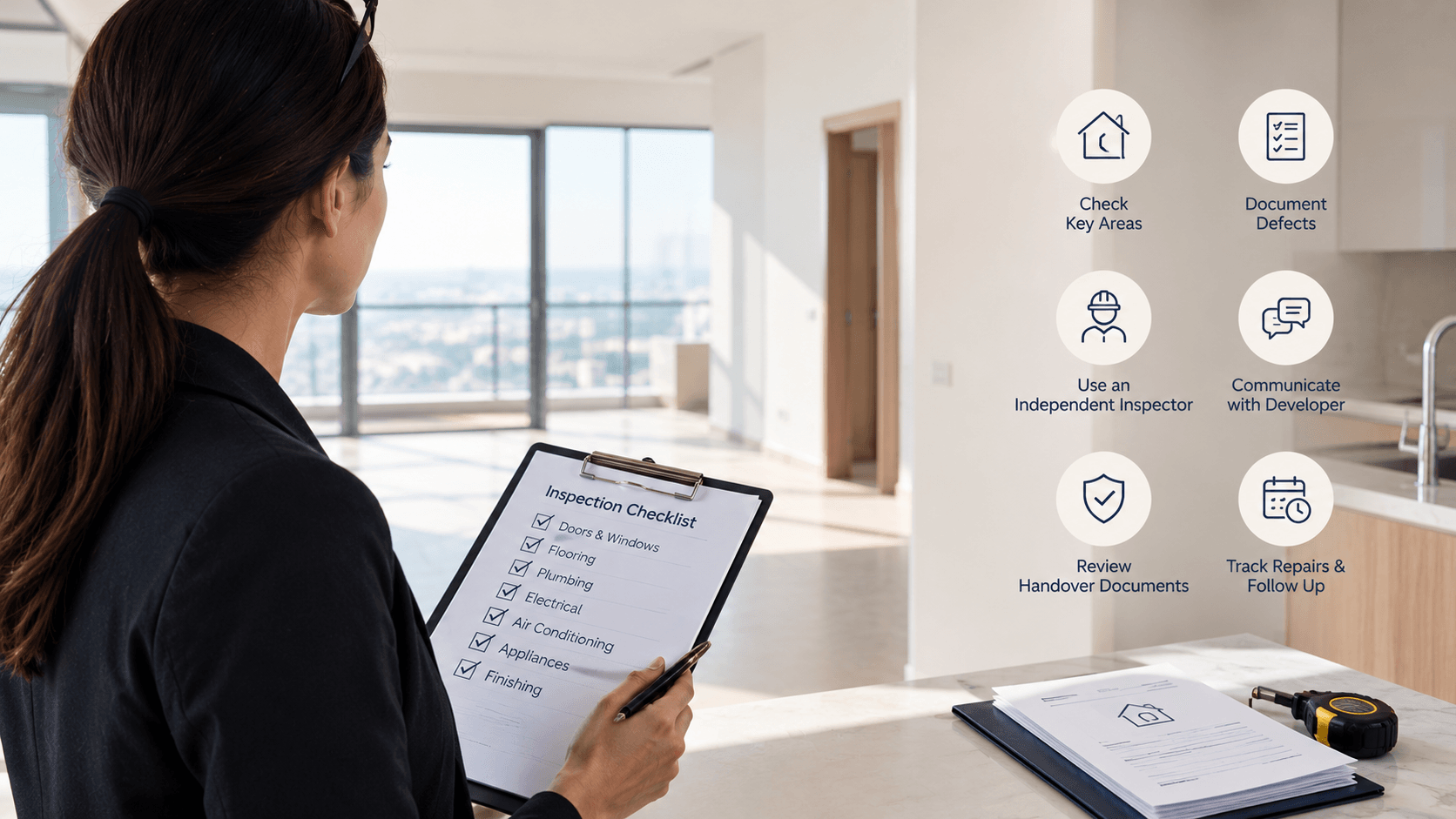
Quick Answer: How Do You Snag a Dubai Apartment from Abroad?
A Dubai apartment handover inspection checklist helps overseas buyers identify defects before accepting a newly built property. Arrange an independent inspection, confirm access with the developer, and request a detailed report with photographs and videos. Check doors, windows, flooring, plumbing, electrical fittings, air conditioning, and installed appliances. Submit defects in writing, track the developer’s response, and review the handover documents before signing. Your contract determines the applicable deadlines and obligations.
Introduction
A Dubai apartment handover inspection checklist is essential when you are buying a newly built apartment but cannot travel to the UAE to inspect it personally. A property may look complete during a sales visit while still having problems with flooring, plumbing, electrical fittings, air conditioning, or finishing work.
For NRIs and international families, the challenge is not simply identifying defects. It is coordinating access, appointing a reliable inspector, documenting findings, communicating with the developer, and understanding what the handover documents mean before accepting the property.
Snagging is one part of a wider purchase process. If you are still evaluating a property, start with this guide to buying property in Dubai as a foreigner. If you have already purchased an off-plan unit, this checklist will help you organise the inspection and follow-up process.
The central principle is straightforward: do not rely on a visual impression or a verbal assurance that the apartment is ready. Obtain evidence, record defects, and understand your contractual position.
What Is Snagging in Dubai Real Estate?
Snagging is the process of inspecting a property for visible defects, incomplete work, or installation issues. The findings are recorded in a snag list or inspection report, which can be shared with the developer for review and rectification.
Typical findings include:
- Scratched flooring, chipped tiles, and uneven finishes.
- Doors or windows that do not close properly.
- Leaking taps or poorly draining sinks.
- Faulty switches, lights, or installed appliances.
- Air-conditioning problems or visible condensation.
- Damaged cabinets, worktops, or bathroom fittings.
- Incomplete sealant or visible gaps around fittings.
A snagging inspection is not the same as a full structural survey, legal review, or certification of every building system. The inspector should clearly state what was tested, what could not be accessed, and which concerns may require a specialist.
For a broader framework covering the property purchase itself, see the Dubai property due diligence process.
Why Remote Buyers Should Arrange an Independent Inspection
When a buyer lives abroad, the developer’s handover notification may arrive while the buyer is dealing with work, travel, or other commitments. It can be tempting to ask someone to collect the keys and rely on photographs supplied by the developer.
That approach may leave important questions unanswered.
An independent inspection can help you:
- Obtain a documented view of the apartment’s visible condition.
- Identify defects that need further investigation.
- Keep a record of the property before moving in or furnishing it.
- Submit specific issues to the developer instead of making general complaints.
- Track rectification and arrange a follow-up inspection where appropriate.
- Coordinate the next steps for occupation or rental.
An inspection does not guarantee that every defect will be identified or that the developer will resolve every issue within a particular period. Its value lies in creating a clear, evidence-based record.
If you are buying off-plan, revisit this guide to buying off-plan property in Dubai to understand how handover fits into the broader transaction.
Step 1: Confirm the Handover Process Before Booking an Inspector
Before arranging the inspection, contact the developer or its authorised handover team. Ask for the inspection procedure, permitted dates, access requirements, and instructions for submitting defects.
Confirm the following in writing:
- The unit number, building, and scheduled handover date.
- Whether an inspection can take place before formal acceptance.
- Whether an independent inspector is permitted.
- How the inspector can obtain access.
- Whether there is a prescribed snagging form or portal.
- The deadline, if any, for submitting inspection findings.
- The procedure for reinspection after rectification.
- Which documents or payments are required for handover.
Keep the SPA, reservation documents, unit specifications, and correspondence in one folder.
Your Sale and Purchase Agreement (SPA) is particularly important because inspection arrangements, payment obligations, completion dates, and acceptance procedures can vary. If a handover requirement is unclear, request a written explanation rather than relying on an informal assurance.
For buyers who want a structured approach to transaction checks, the Dubai real estate advisory process offers a starting point for understanding how due diligence can be organised.
Step 2: Choose an Independent Snagging Inspector
A remote buyer needs more than someone who can take a quick video of the apartment. Choose an inspector whose experience and inspection scope match the property and the checks you need.
Before appointing a professional, ask:
- Have you inspected newly completed apartments in Dubai?
- What does the inspection cover?
- Are plumbing fixtures, electrical fittings, air conditioning, and ventilation tested where accessible?
- Do you provide a room-by-room report?
- Will the report include labelled photographs?
- Can you distinguish visible defects from items requiring specialist testing?
- Can you attend a follow-up inspection?
- What are the fees, exclusions, and delivery timelines?
Request a sample report, with the previous client’s private information removed, if one is available. This can help you understand whether the findings are specific enough to send to a developer.
Do not choose an inspector solely on price. A very short report with vague descriptions may be difficult to use when asking for rectification.
For additional background on the general inspection process, see Property Finder’s guide to snagging surveys before buying property. This is a secondary industry source; the scope of your own inspection should still be agreed directly with your chosen inspector.
Step 3: Use This Room-by-Room Dubai Apartment Handover Inspection Checklist
The following checklist covers common inspection points. Not every item applies to every apartment, and some systems may require a qualified specialist or a separate test.
Entrance, doors, and windows
- Main door opens, closes, and locks correctly.
- Door handles, hinges, and frames are secure.
- Internal doors operate without rubbing or sticking.
- Windows open and close smoothly.
- Window and balcony-door locks work.
- Visible seals are complete and undamaged.
- Glass is free from obvious cracks, chips, or damage.
- Gaps, scratches, or poor alignment are photographed.
Walls, ceilings, and flooring
- Walls have no obvious unfinished patches or damaged paint.
- Ceilings have no visible stains or cracks.
- Tiles and other floor finishes are checked for chips or cracks.
- Skirting boards are fitted neatly.
- Grout and sealant are complete where visible.
- Built-in cabinets and wardrobes are aligned.
- Worktops and other surfaces are free from obvious damage.
- Each defect is photographed close up and from a wider angle.
A visible crack or stain does not automatically establish the underlying cause. Record the observation and request further assessment if necessary.
Kitchen
- Sink taps operate and water drains properly.
- No visible leaks appear beneath the sink.
- Cabinet doors and drawers open and close correctly.
- Worktops and backsplash finishes are checked.
- Installed appliances are present if included in the agreed specifications.
- Appliances are tested where access and safe operation permit.
- Extractor fan operates, where installed and testable.
- Visible plumbing connections appear complete.
Bathrooms
- Basin taps and shower fittings operate.
- Toilet flushes correctly.
- Water drains from the basin and shower area.
- No visible leaks appear beneath the basin.
- Sealant around basins, baths, and shower screens is checked.
- Tiles and grout have no obvious damage or missing sections.
- Bathroom doors and fittings operate properly.
- Ventilation operates where it can be tested.
Waterproofing problems may not be fully detectable during a visual inspection. If there are signs of water ingress, poor drainage, or other concerns, document them and ask whether specialist testing is appropriate.
Electrical fittings and air conditioning
- Lights and switches work.
- Accessible electrical outlets are checked using suitable methods.
- Air-conditioning controls respond.
- Cooling performance is checked during the inspection, where possible.
- No obvious leakage or condensation is visible around accessible units.
- Exhaust fans and ventilation operate where testable.
- Intercom and doorbell function.
- Installed safety devices are checked within the agreed inspection scope.
Electrical panels, wiring, and concealed systems should not be opened or altered by an unqualified person. Any suspected safety issue should be referred to an appropriately qualified professional.
Balcony, parking, and storage
- Balcony doors operate correctly.
- Visible balcony finishes and drainage points are checked.
- No obvious damage is visible on accessible surfaces.
- Allocated parking details match the documentation.
- Storage areas are checked if included in the purchase.
- Keys, access cards, and other promised access items are accounted for.
Do not conduct unsafe tests on balcony railings or other building elements. Report visible concerns to the developer or an appropriate specialist.
Step 4: Request a Clear Report With Photographs and Videos
A useful snagging report should allow someone who has never visited the apartment to understand exactly what is wrong and where the issue is located.
Ask for the report to include:
Report item | What it should contain |
Defect reference | A unique number for each issue |
Location | Room, wall, fixture, or affected area |
Description | A specific explanation of the observed problem |
Photograph | A close-up showing the defect |
Context image | A wider view showing where the defect is located |
Priority | A classification if the inspector provides one |
Further action | Recommended specialist review, if needed |
Limitations | Any areas or systems that could not be inspected |
For example, “bathroom problem” is not a useful defect description. “Water remains around the shower drain after the shower is turned off; see photographs 12 and 13” is more actionable.
The inspector should distinguish between an observed defect and a suspected underlying cause. This helps avoid presenting an unverified technical conclusion as a confirmed fact.
Step 5: Submit the Snag List and Track Developer Responses
Once you receive the report, submit it using the developer’s prescribed process. Ask for written acknowledgement and confirmation of the next steps.
Maintain a simple tracking table:
Defect | Date reported | Developer response | Current status |
Example: damaged cabinet door | Date submitted | Repair proposed | Pending |
Example: bathroom drainage concern | Date submitted | Further check requested | Under review |
Example: faulty light switch | Date submitted | Rectification reported | Reinspection needed |
The examples above are illustrative, not reports of actual defects at a particular development.
Keep all correspondence and retain the original report. If a defect is marked as resolved, ask for evidence or arrange a follow-up inspection where practical.
Do not assume that every defect automatically entitles you to delay payment or refuse handover. The answer depends on the SPA, the circumstances, and applicable law. If a material defect affects acceptance or payment, obtain independent legal advice before taking action.
Step 6: Review Handover Documents Before Signing
The inspection is only one part of handover. Before signing, understand what the documents confirm and whether outstanding issues have been recorded.
Review:
- The final account statement.
- Outstanding instalments and other charges.
- Handover or possession documents.
- The list of unresolved defects and any written follow-up commitments.
- Keys, access cards, and parking information.
- Utility connection instructions.
- Building management and service-charge contacts.
- Warranty documents and appliance manuals, where applicable.
- The status of the property’s registration and Title Deed.
Ask for clarification if a document contains unfamiliar language or if a charge does not match your records. Keep copies of everything you sign or receive.
For buyers who are still assessing the investment as a whole, this practical guide to investing in Dubai real estate offers further context on evaluating a property beyond its advertised price.
Step 7: Understand the Official Guidance and Its Limits
Use primary sources for official procedures and legal requirements. Secondary property articles can help explain common practices, but they should not replace the SPA or current government guidance.
The following sources are useful starting points:
- Dubai Land Department (DLD): Its official FAQ page provides information on property-related services and regulatory topics.
- DLD Development Handbook: The Real Estate Development Handbook describes stages of the development process, including approvals, completion certificates, and sales and marketing.
- Dubai Law No. 3 of 2026: The official law concerning the quality and safety of buildings in Dubai addresses building quality and safety, including technical assessment and maintenance obligations. It is not a substitute for a unit-specific snagging report or legal advice on your SPA.
The 2026 law concerns building quality and safety, including assessment of building condition in the circumstances covered by the legislation. Do not interpret it as a guarantee that every newly handed-over apartment will be defect-free or that every item on a private snag list is covered by the same legal process.
For a transaction-specific question, confirm the applicable rule with the relevant authority or a qualified UAE legal professional.
Step 8: Plan for What Happens After Handover
Receiving the keys does not mean that property oversight should stop. Keep the inspection report and any developer correspondence in a permanent digital folder.
After handover:
- Retain the original snagging report and all photographs.
- Save the developer’s acknowledgement and rectification updates.
- Record any new defects discovered during normal use.
- Keep warranties, manuals, and maintenance contacts together.
- Confirm the property’s registration documents and retain the Title Deed when issued.
- Arrange maintenance or property management if you intend to rent the apartment.
If the apartment is an investment, think about the next stage as well: service charges, leasing arrangements, maintenance, and the practicalities of managing the property from abroad.
You can explore more topics through the Dubai off-plan property investment guide and the Dubai property investment research archive.
Common Mistakes Remote Buyers Should Avoid
Relying only on a video tour
A video tour can show visible finishes, but it may not allow proper testing of plumbing, electrical fittings, air conditioning, or other systems. Use a documented inspection with a clearly defined scope.
Hiring an inspector without checking the report format
A report should identify each defect and show where it is located. Ask for a sample report before appointing the inspector.
Treating every defect as cosmetic
Some visible issues may need specialist assessment. Record what was observed and avoid guessing at the cause.
Signing documents without checking outstanding issues
Review the handover documents and ask for unresolved defects to be recorded. Seek advice if you are unsure about the implications of signing.
Failing to follow up
A submitted report is not the end of the process. Keep track of responses, rectification, and any follow-up inspection.
Assuming snagging guarantees a particular legal outcome
An inspection is evidence of the condition observed at a particular time. Contractual rights, defect liability, and remedies depend on the applicable documents and law.
Frequently Asked Questions
1. What is a snagging inspection in Dubai?
A snagging inspection identifies visible defects, incomplete work, and installation issues in a property. The findings are recorded in a report that can be shared with the developer for review and rectification.
2. Can I arrange a Dubai apartment handover inspection from abroad?
Yes. You can coordinate access with the developer and appoint an independent inspector to examine the apartment. Request a detailed report with photographs, videos where useful, and notes on any limitations.
3. Should I complete snagging before accepting the apartment?
Where the developer’s process and your contract permit it, arrange an inspection before formal acceptance. Review the handover documents carefully and seek advice if unresolved defects or acceptance wording raise concerns.
4. What should a Dubai apartment handover checklist include?
It should cover doors and windows, walls and ceilings, floors, kitchen and bathroom fittings, plumbing, electrical fixtures, air conditioning, ventilation, balconies, keys, access cards, and any allocated parking or storage.
5. Does a snagging report guarantee that every defect will be fixed?
No. A snagging report documents identified issues, but rectification depends on the developer’s process, contractual terms, and applicable law. Retain written evidence and seek qualified advice when needed.
6. Can I rely on a video tour instead of a professional inspection?
A video tour can help you understand the apartment’s visible condition, but it may not reveal concealed defects or allow proper testing of systems. If possible, use an appropriately qualified independent inspector and request clear documentation.
7. What should I do if the developer does not resolve reported defects?
Keep the original report and correspondence, request a written update, and review the SPA and applicable procedures. For formal options, consult the relevant Dubai authority or a qualified legal professional.
8. Does receiving the keys mean the Title Deed has been issued?
Not necessarily. Physical handover and final title registration are separate steps. Confirm the registration status and verify the Title Deed through the appropriate Dubai Land Department service when it has been issued.
Conclusion
A well-planned Dubai apartment handover inspection checklist helps overseas buyers approach handover with better documentation and fewer avoidable surprises. Confirm the developer’s process, appoint an independent inspector, check the apartment systematically, submit defects in writing, and keep track of rectification.
Most importantly, treat snagging as part of a broader due-diligence process rather than a one-time formality. Your inspection report, SPA, handover documents, and registration records each serve a different purpose.
For more guidance, explore the Dubai property due diligence process, the Dubai real estate advisory page, and the property investment research archive.
About the Author
Ritu Kant Ojha is a Dubai-based real estate investment advisor and the founder of Proact Luxury Real Estate (RERA BRN 71195). An IIM Lucknow alumnus and former financial journalist at Bloomberg and CNBC, he has spent two decades covering and analysing capital markets before moving into property advisory. He works with NRI and international families buying in the UAE, with a focus on independent due diligence, structured decision-making, and long-term asset strategy. He is the author of The Only Difference (2026), which sets out the ADVICEdge framework for evaluating financial advisors, and Real Conversations In Digital Age (2019)