
Non-residents can secure a Dubai mortgage, but lenders restrict the loan-to-value ratio significantly compared to resident applications. According to published criteria from banks like Mashreq, non-resident property buyers can borrow a maximum of 50% of a property’s fair market value. You must fund the remaining deposit and transaction costs entirely from your own liquid resources.
For overseas buyers making property decisions in 2027, relying on the seller's asking price to calculate that deposit creates a severe funding gap if the bank's valuer assesses the asset lower. This article outlines how UAE lenders evaluate foreign income, why financing timing differs between ready and off-plan properties, and how to stress-test your net rental yield before signing a contract.
Compare Lender Eligibility, Not Just Headline LTV
Published lending criteria show meaningful differences across UAE banks. Lenders set distinct rules regarding maximum loan-to-value (LTV) ratios, repayment terms, and relationship requirements for applicants based outside the country. For property-level advice that puts these offers in context, start with an objective assessment: we evaluate financing assumptions alongside the asset, downside exposure, net returns, liquidity, and exit plan, while the lenders below remain the providers of mortgage credit.
| Lender Example | Published Non-Resident Terms | Practical Implication |
|---|---|---|
| ADCB Standard Mortgage Loan | Up to 50% financing. Maximum tenor 15 years. The bank's FAQ lists a non-resident loan range of AED 750,000 to AED 15 million, requires an ADCB savings account for repayments, and states a minimum AED 200,000 in assets under management for salaried applicants. | A 50% maximum LTV requires at least 50% equity against the bank's valuation before costs. The asset-under-management requirement and 15-year tenor can restrict borrowing capacity compared to resident loans. |
| Mashreq Home Loan for Non-Residents | Up to 50% of the fair market value. Valuations are determined by a Mashreq-approved valuation agency. Loans run up to AED 10 million over a maximum 25-year tenor. Salaried and self-employed people working outside the UAE may apply. | The valuation sets the equity gap, not the seller's asking price. The longer 25-year tenor lowers monthly payments compared to shorter terms, assuming similar interest rates. |
| HSBC UAE Non-Residents Mortgage | Borrow up to 60% of property value. Applicants must be HSBC Private Bank or Premier customers, or eligible for those accounts. The bank estimates a process of up to 14 working days in most cases, depending on circumstances. | The higher LTV is tied to a specific relationship banking tier rather than being generally available to all applicants. Timing estimates apply to this specific provider. |
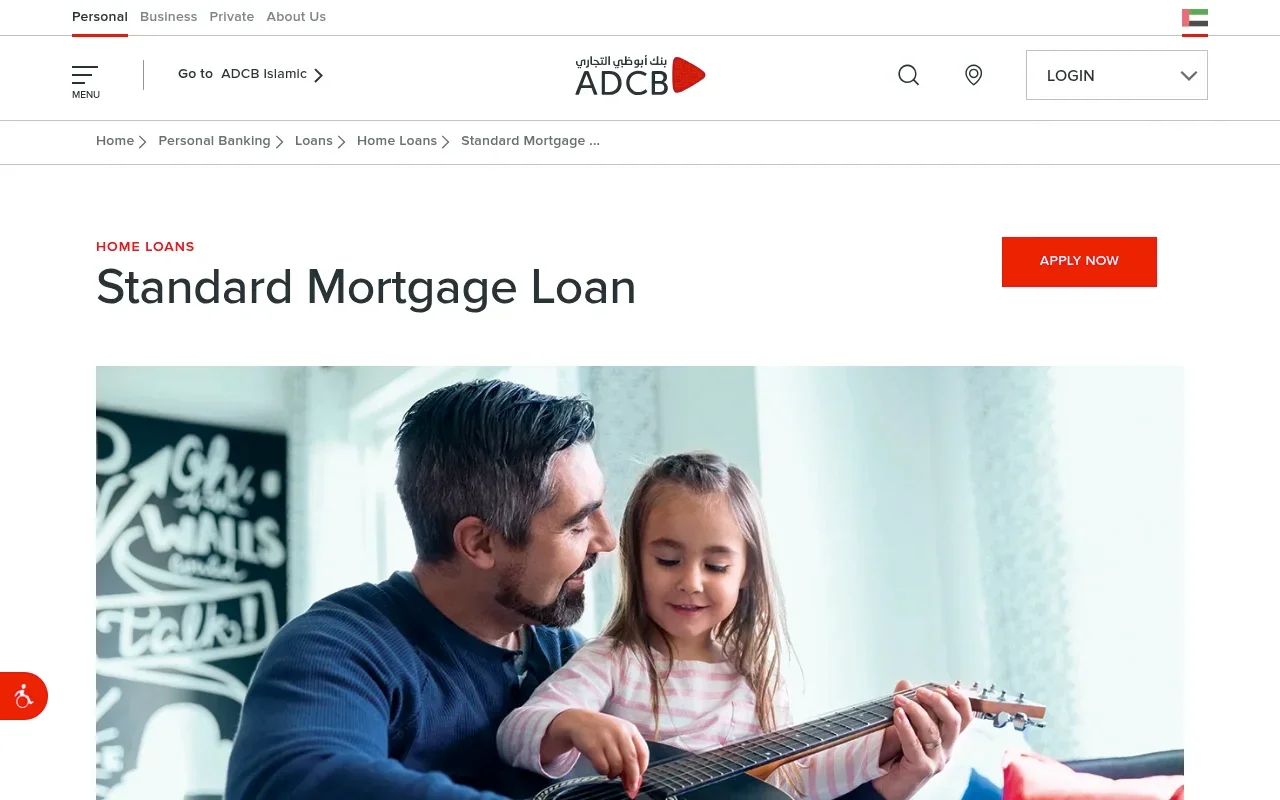
These published policies from ADCB show that a bank evaluates your broader financial relationship alongside the property asset. The terms serve as examples of the latest available data from October 7, 2026, representing what a buyer might encounter rather than a universal market range.
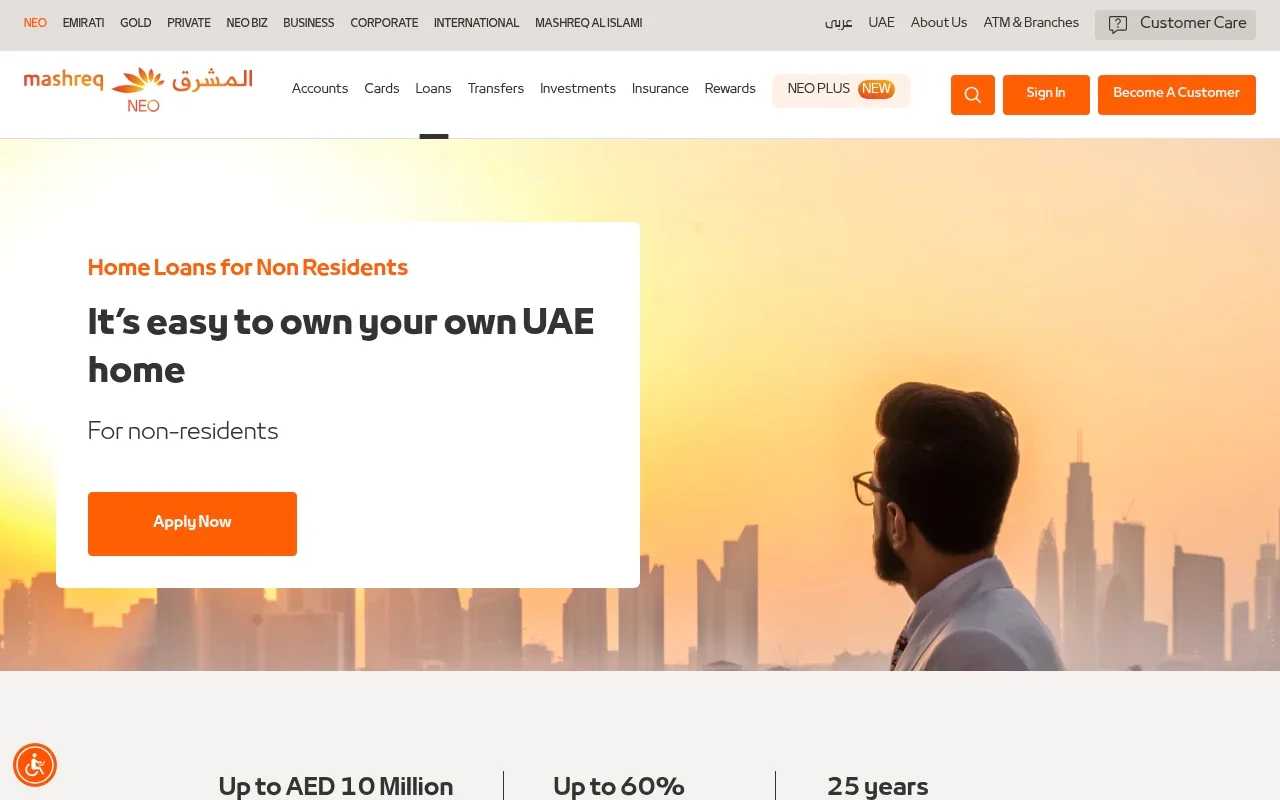
Similarly, Mashreq says non-residents can borrow up to 50% of a property's fair market value, as determined by a Mashreq-approved valuation agency, and that eligibility depends on the borrower's financials. So if the valuation is below the purchase price, using the purchase agreement alone to estimate your deposit leaves a funding gap.
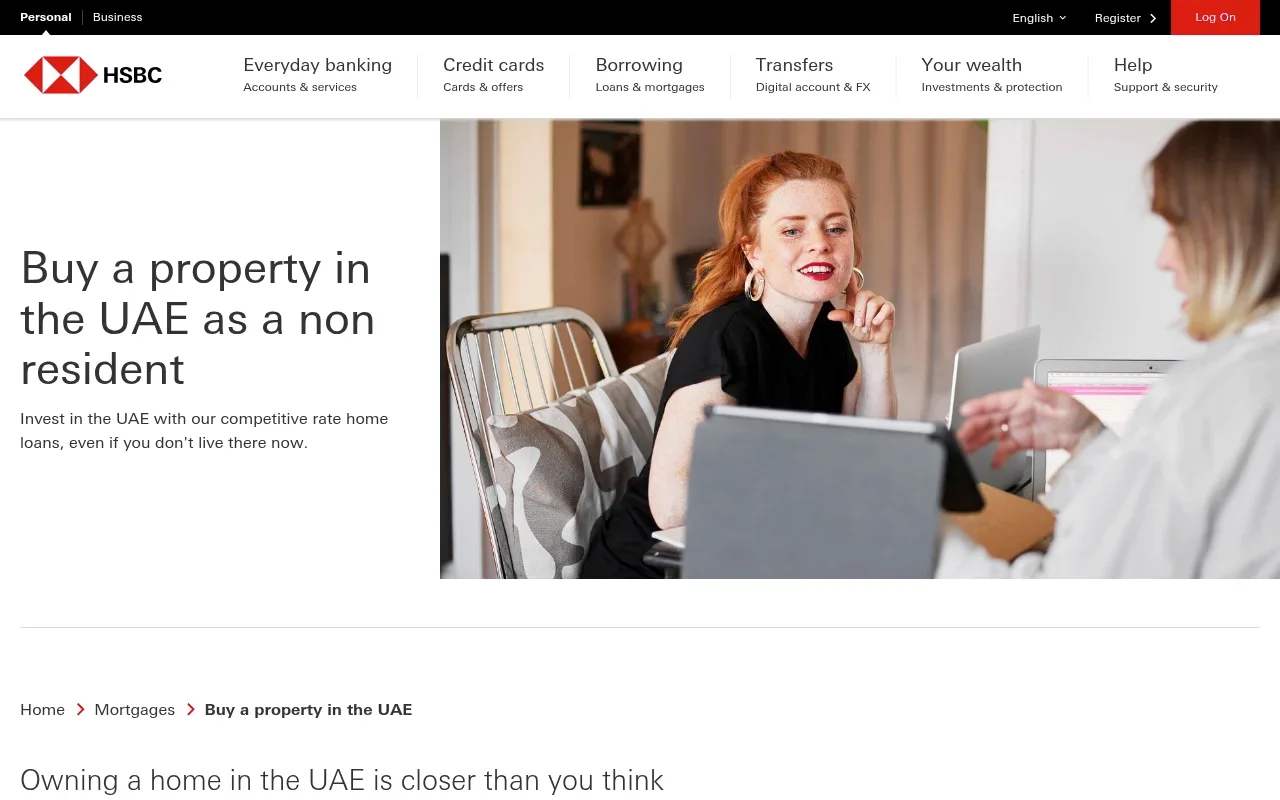
To apply for an HSBC non-resident mortgage, you need to be an HSBC Premier or Private Bank customer, or be eligible for an account. HSBC offers mortgages up to 60% of a property's value, so a buyer borrowing at that maximum needs to fund the remaining 40% before transaction costs.
Prepare Proof of Overseas Income and Debts
Banks verify repayment capacity by reviewing a long record of overseas income and existing debt. Because lenders cannot easily recover funds across borders if a borrower defaults, the documentation requirements remain strict.
Using ADCB as an example, the bank publishes a detailed checklist for certain accepted nationalities. Salaried applicants may need to provide a passport, their latest salary certificate, six months of bank statements, two years of tax returns, and a credit bureau report from their home country if a UAE Al Etihad Credit Bureau report is unavailable. Self-employed applicants undergo heavier scrutiny. Their checklist includes two years of audited financial statements, two years of tax returns, 12 months of personal and corporate bank statements, personal and company credit reports, and official company documents like the memorandum of association and trade licence.
Preparing these files before approaching a lender streamlines your application. Gather your identity documents and current proof of residence, then compile a clear record of your salary or business distributions backed by the corresponding tax returns. You can order a credit report from your current country of residence and map out the balances and monthly payments for any existing loans, including overseas mortgages.
If you earn variable bonuses or draw discretionary dividends from a business you own, ask your mortgage broker how the specific lender treats that income. Some banks discount variable earnings heavily or exclude them entirely when calculating your maximum monthly payment capacity. Establishing these facts early prevents applications from failing in the final underwriting stage.

Calculate the Deposit From the Bank’s Valuation
Your cash to close involves more than a standard deposit percentage. The calculation requires taking the agreed purchase price, subtracting the approved loan amount, adding all transaction costs, and holding back a retained liquidity buffer for emergencies.
The bank's valuation drives the entire formula. If you agree to buy an apartment for AED 2 million, the lender sends a third-party valuer to assess the property. If the valuer decides the fair market value is AED 1.9 million, your 50% LTV product limit applies to that lower figure, capping the maximum loan at AED 950,000. You then need AED 1.05 million to meet the seller's price, assuming your income assessment allows the maximum loan. Understanding the full cost of flats in Dubai requires modeling these valuation gaps before signing a binding contract.
Transaction costs add another layer to your initial cash requirement. Budget for the lender's valuation charge, a mortgage arrangement charge, property registration costs, mortgage registration costs, life insurance, property insurance, and any applicable brokerage costs. For context, HSBC publishes a standard valuation charge of AED 2,625 including VAT, though this is a provider-specific charge and other banks set their own rates. Checking the current official tariff for Dubai Land Department and trustee charges gives you a complete picture, as these amounts are payable at transfer.
Central Bank mortgage regulations stipulate that the down payment come from the borrower's own resources, rather than from other forms of borrowing. Taking out a personal loan in your home country to fund the deposit on a Dubai property violates these rules. Our advisory practice helps clients model lender-specific cash-to-close scenarios, including valuation gaps and downside cases, so they have the correct liquidity reserves ready before committing to a purchase.

Ready vs. Off-Plan: When Can Finance Arrive?
Timing dictates how you plan your funding. Ready properties follow a predictable sequence, whereas off-plan projects require different liquidity assumptions.
For a ready property, you generally start with a pre-approval based on your income and credit profile. ADCB's May 2025 home-buying guide outlines a process moving from this pre-approval to property selection, valuation, full application, final offer, and title-deed registration. If you decide to buy properties in Dubai Marina that are vacant and ready for transfer, the bank evaluates a physical asset. HSBC notes that an Approval in Principle is valid for 60 days without guaranteeing a final loan. The bank's estimate of up to 14 working days to arrange a mortgage applies to its own internal process, subject to the applicant's circumstances. Build a realistic timeline that accounts for document gathering, valuer scheduling, final credit committee approval, and coordination with the seller for the final transfer.
Financing an off-plan property presents a different challenge. The CBUAE regulatory ceiling of 50% LTV for off-plan schemes does not mean banks automatically finance every under-construction unit, as lenders restrict their exposure to specific developers and individual projects. ADCB's FAQ, for instance, marks non-resident financing for under-construction properties as not applicable in its property-count table. Other banks offer off-plan financing based on the construction stage and the developer's track record.
When evaluating the best off plan projects in Dubai, confirm borrower eligibility, project approval, the required construction milestones, and exact drawdown timing before relying on future finance. A sound strategy models the developer's payment schedule using liquid funds you already control. Assuming a bank steps in to cover a 40% handover payment creates severe risk. If the lender changes its non-resident policy or the property valuation falls short at completion, you remain contractually obligated to pay the developer in cash.
Test Total Cost and Decide Whether to Proceed
Comparing lenders requires looking past the headline LTV to evaluate the total cost of debt. A lower deposit requirement often comes with a shorter repayment tenor, higher arrangement charges, or less favorable interest rates.
Review the rate structure closely. A bank might offer a variable rate linked to the Emirates Interbank Offered Rate (EIBOR) plus a fixed margin, or a hybrid product fixing the interest for the first few years before switching to a variable rate. Compare a 15-year maximum tenor against a 25-year option, as the shorter term demands higher monthly payments that restrict your cash flow. Account for mandatory life insurance premiums assigned to the bank, mortgage arrangement charges, early settlement charges if you sell the property before the term ends, and exit costs.
Overseas investors benefit from stress-testing their payments against currency fluctuations. If your income and savings sit in British Pounds, Euros, or another floating currency, a weaker home currency makes your AED mortgage payments more expensive in real terms because the Dirham is pegged to the US Dollar. Model how your portfolio handles a sharp currency shift alongside a potential interest rate increase.
Testing your rental income assumptions clarifies your actual holding costs. Gross yield reveals little about your ability to carry a mortgage until you calculate the net rent after deducting service charges, property management costs, maintenance costs, sinking fund contributions, and the mortgage payment itself. Incorporating a vacancy rate shows whether the property breaks even when empty for a month. CBUAE regulatory guidance prohibits lenders from basing a borrower's ability to repay on expected future property price appreciation, and applying that same discipline to your own planning protects your capital. The investment needs to work on its current cash flow, without relying on aggressive rent increases or a sudden jump in capital value to make the numbers viable.
If your eligibility is uncertain, the valuation falls short, or the cash-to-close leaves you without an emergency buffer, you have choices. You can reduce your leverage by increasing your deposit, switch from an unverified off-plan scheme to a ready unit, wait until you secure confirmed financing, or walk away from the deal entirely. We align this financial modeling with your long-term wealth strategy. We evaluate valuation risks, net returns, legal holding structures, and exit options before you execute a transaction, and continue to monitor the portfolio afterward.
Evaluating a property purchase requires looking past the launch promotions to test the underlying numbers. Stress-testing these figures ensures you proceed only when the financial framework supports your long-term wealth strategy, rather than rushing into an unsuitable commitment.
Book a no-obligation intro call with Ritu Kant Ojha Real Estate Advisory; Ritu Kant personally works with every client.
Ask Ritu Kant
Have a question about your purchase? Ask me directly.
Tell me what you are considering. I read every message myself and reply within one working day.