Dubai Service Charges Explained: What They Cover and How to Check Them Before You Buy
Dubai service charges are the annual fees every owner in a jointly owned building or community pays to keep shared areas running, and they are the cost line first-time buyers most often underestimate. The brochure shows the price, the payment plan and a projected rent. It rarely shows what the building will cost you every year, for as long as you own it. Quick Answer Dubai service charges are annual fees, set per square foot, that every owner in a jointly owned building or community pays for
Updated 3 November 2026
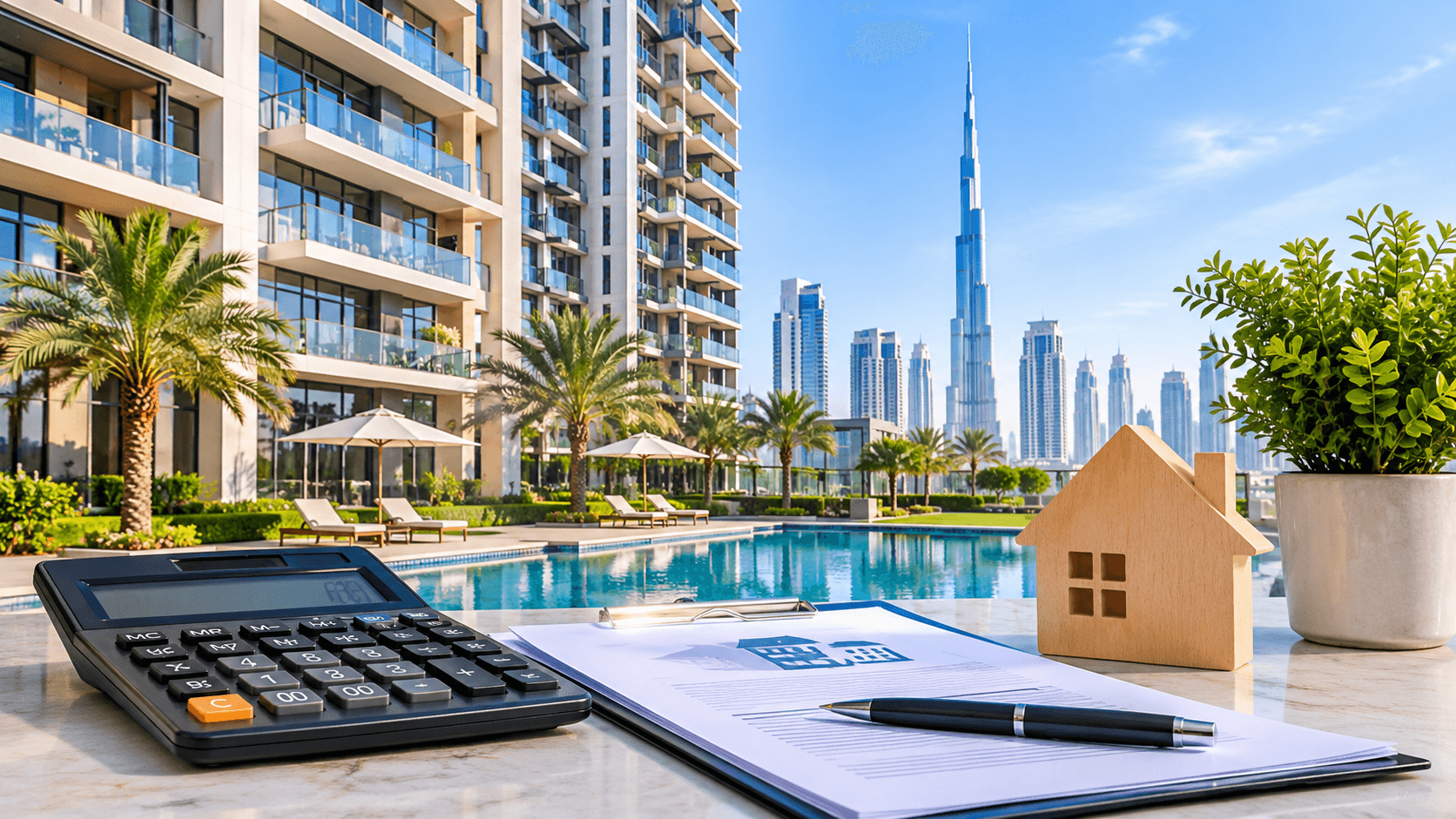
Dubai service charges are the annual fees every owner in a jointly owned building or community pays to keep shared areas running, and they are the cost line first-time buyers most often underestimate. The brochure shows the price, the payment plan and a projected rent. It rarely shows what the building will cost you every year, for as long as you own it.
Quick Answer
Dubai service charges are annual fees, set per square foot, that every owner in a jointly owned building or community pays for common-area maintenance, security, utilities, management and a reserve fund. Budgets are approved through RERA and invoiced via Mollak. Before you buy, look up the building on the DLD Service Charge Index, compare it with the seller's figure, and ask for the latest invoice and any outstanding dues.
The good news is that Dubai gives buyers an official, free way to check. The rest of this guide shows what the charge covers, what it usually does not, how to read the numbers, and how to verify them before you commit money.
What Are Service Charges in Dubai?
A service charge is a recurring fee collected from the owners of units in a jointly owned property. It pays for managing, operating, maintaining and repairing the parts of the building or community that everyone shares: lobbies, lifts, pools, landscaping, security, and the systems behind them.
The legal basis is Dubai Law No. 6 of 2019 Concerning Ownership of Jointly Owned Real Property. According to the law's published text (2019, primary source), it applies to all jointly owned real property in the emirate, including projects in special development zones and free zones. In practice that means almost every apartment you might buy in Dubai, and many villas inside master communities.
The obligation sits with the unit owner. If you plan to rent the property out, the charge is simply a cost of owning it, which is why it belongs in your return calculation from day one.
What Do Dubai Service Charges Cover?
The exact list differs from one building to the next and is set out in the budget approved for that project. As a general guide, the day-to-day (general fund) budget usually covers the items below.
What is typically included
- Security, reception and CCTV
- Cleaning, pest control and landscaping of common areas
- Maintenance of lifts, pumps, fire and life-safety systems and other shared equipment
- Common-area electricity, water and cooling
- Pools, gyms and other shared amenities
- Insurance for the common parts of the building
- Property management and administration fees
- A contribution to the reserve fund (explained below)
A 2020s-era explainer on owners' funds describes the general fund as paying for daily common-area maintenance, utilities, management, insurance premiums and other recurring expenses (secondary source, undated; read it as a description of how the funds are intended to work, and confirm specifics for your own building in the approved budget).
What is typically not included
Item | Usually inside the service charge? | What to ask |
Repairs and upkeep inside your unit | No | These are the owner's cost |
Your own electricity and water bills | No | Billed separately to the unit |
District cooling or chilled water | Often billed separately | Ask how it is charged (fixed and consumption parts) and request a recent bill |
Extra parking bays or storage | Varies | Ask whether any are chargeable |
Contents insurance and mortgage costs | No | Budget these on your side |
Major works beyond the reserve fund | Not part of the regular charge | Ask whether any large works are planned |
District cooling deserves its own question. In many towers it is billed on top of the per-square-foot charge, and one broker guide (secondary, 2026) estimates it at roughly AED 2,000 to 6,000 a year. Treat that as an approximate figure only and ask for a real bill from the building you are considering.
The reserve fund, in plain language
A reserve (sinking) fund is money set aside for large, infrequent costs such as replacing lifts, waterproofing, chillers or fire systems, so that a big repair does not arrive as a surprise invoice. Commentary on the regime describes two separate funds, a general fund and a reserve fund, with the reserve budgeted over a longer horizon and ideally based on an independent study of replacement costs (secondary source). For a buyer, the practical point is simple: a building with a thin reserve and an ageing structure is a building where charges may have to rise later.
Who Sets and Regulates Dubai Service Charges?
More than one body is involved, and it helps to know who does what.
Body | Role |
Dubai Land Department (DLD) | Maintains the register of jointly owned property and publishes the Service Charge Index |
RERA (Real Estate Regulatory Agency, part of DLD) | Regulates management of jointly owned property, reviews budgets and can inspect operations |
Management entity (management company) | Runs the building, prepares the budget and issues invoices |
Mollak | RERA's system for monitoring service charge payments and holding funds in approved accounts |
Owners committee | Where formed, represents owners; its role is limited by the law |
When the 2019 law took effect, Gulf News reported (2019, secondary) that the earlier owners association model was replaced by management entities, with RERA overseeing revenue and expense reports. Coverage from the same period also noted that developers lost the right to collect service charges on behalf of owners in these properties, which is why invoices now run through Mollak rather than a developer's own system.
The Mollak portal (primary source, accessed October 2026) describes itself as the platform that lets owners see the RERA-approved rate, what is included in an invoice and how each component is calculated. That is the transparency you want to use before you buy, not after.
How Much Do Dubai Service Charges Cost?
Service charges in Dubai are generally calculated annually based on the applicable rate per square foot and the chargeable area of the property. The amount varies by building, community, facilities, maintenance requirements and property management arrangements.
Annual service charge = Chargeable area (sq. ft.) × Approved annual rate per sq. ft.
Before calculating the total, confirm which area is used for billing. It may differ from the marketed property size, so check the title deed and the applicable details in the official Dubai Land Department (DLD) Service Charge Index.
Typical Dubai Service Charge Ranges (Approximate)
There is no single service charge rate for all properties in Dubai. Published estimates vary depending on the developments and reporting periods covered. The ranges below are for general guidance only and should not replace the approved rate for a specific property.
Property type | Indicative annual range (AED per sq. ft.) | Source type |
Apartments | Approximately AED 10–30 | General market estimates |
Villas and townhouses | Approximately AED 2–6 | General market estimates |
Prime and branded residences | Some properties may reach approximately AED 55–65 or more | Estimates for selected luxury developments |
Source note: These figures are indicative estimates, not verified official rates for individual developments. Confirm the applicable charges through the Dubai Land Department Service Charge Index before making a property cost calculation.
Actual charges can vary significantly between buildings, even within the same neighbourhood. Always verify the approved rate for the specific property and billing period before estimating annual ownership expenses.
A worked example (illustrative only)
Take a hypothetical 900 sq ft apartment priced at AED 1.5 million that rents for AED 90,000 a year. The table shows how the service charge changes the picture. All figures are assumptions for illustration, and they ignore other costs such as maintenance, vacancy and management fees.
Scenario | Rate (AED/sq ft) | Annual service charge | Income after charge | Yield after charge |
Gross, no charge | n/a | AED 0 | AED 90,000 | 6.0% |
Moderate-charge building | 15 | AED 13,500 | AED 76,500 | 5.1% |
Higher-charge building | 25 | AED 22,500 | AED 67,500 | 4.5% |
Same price, same rent, a 1.5 percentage point swing in return, purely from the building's charge. This is why two apartments with the same headline yield can behave very differently once costs are counted.
How to Check Dubai Service Charges Before You Buy
You do not need to be a resident to run this check. The DLD describes the Service Charge Index as an immediate service open to all residency statuses, available through the DLD website, the Mollak system and the Dubai REST app (DLD service page, primary source, accessed October 2026).
Step 1: Look up the project in the Service Charge Index
Log in to the DLD website or the Dubai REST app, open the Service Charge Index, then select the project name, the usage type (for example residential) and the year. The result shows the RERA-approved charge for that project.
Step 2: Look at more than one year
Because the index lets you choose the year, check the last two or three years where available. A steady line is reassuring. A sharp jump deserves a question to the management company about why.
Step 3: Get the seller's latest invoice and proof of payment
Ask the seller, through the agent, for the most recent service charge invoice and the payment record. Multiply your unit's billed area by the index rate and see whether it matches the invoice. If it does not, ask for the reason in writing before you go any further.
Step 4: Ask for the breakdown behind the number
The per-square-foot figure is a total. Ask what sits inside it: security, cleaning, amenities, management fee and reserve contribution. Mollak is designed to show what an invoice includes and how each component is computed, so use the invoice as your reference rather than a verbal summary.
Step 5: Find the costs that sit outside the charge
Ask specifically about district cooling, parking, and any amenity that carries a separate fee. These are the extras that make a modest-looking charge less modest.
Step 6: Ask about the reserve fund and planned works
For an older building, ask how healthy the reserve fund is and whether major replacements are expected soon. You are not looking for a perfect answer, only for evidence that someone has planned for them.
Step 7: Confirm there are no arrears before transfer
Before a title transfers, the seller normally needs clearance confirming that service charges are paid. A legal guide on the law (secondary, Chambers) notes that the management entity has a preferential right over the unit for unpaid charges and that the unit cannot be disposed of until they are settled. Ask your conveyancing contact or the trustee office to confirm clearance as part of the transfer steps, not as an afterthought.
Red Flags to Watch For
- The seller or agent quotes a figure that does not match the index, and cannot explain the gap.
- No recent invoice is available, or the seller is vague about arrears.
- A noticeable year-on-year jump with no clear reason.
- Cooling, parking or amenity costs that only come up late in the conversation.
- An unusually low charge for a building with a pool, gym and concierge. In my reading of how budgets work, a charge that looks too good can mean a catch-up increase later, so ask what the budget assumes.
- Pressure to skip checks because the unit is a bargain or the launch is closing.
That last one matters most. If a deal cannot survive a ten-minute index lookup, it is not a deal.
Service Charges and Your Rental Yield
Service charges are the most overlooked line in a yield calculation because they feel small next to the purchase price. They are not small next to the rent. On a unit renting for AED 90,000, a charge of AED 20,000 or more removes over a fifth of the income before anything else is counted.
Two practical habits help:
- Calculate yield after service charges, not before. The yield calculator takes a price, a rent and a service charge and shows day-one cash and net yield.
- Remember that rent and service charges follow different rules. Renewal rent increases sit within Dubai's rental index framework, covered in the guide to the RERA rental index calculator, while service charges follow their own approved budget. The two do not have to move together, so a rising charge can squeeze returns even when rent is stable.
For a wider view of what ownership costs beyond the price tag, see the breakdown of the cost of flats in Dubai.
If You Are Buying Off-Plan
Off-plan buyers cannot look up a building that does not yet have a history, so the check changes shape.
- Ask the developer for the estimated service charge per square foot in writing, and ask what it includes.
- Compare that estimate with the index rates for similar, completed buildings of the same standard in the same area.
- Be sceptical of an estimate far below comparable buildings with the same amenities.
- Factor the charge into your cash plan from handover. This is especially important with a payment plan that continues after delivery, which the guide to the post-handover payment plan explains in detail.
If you are earlier in the process and still comparing options, the overview on how to invest in UAE real estate covers the wider off-plan picture.
What Happens If Service Charges Go Unpaid?
This is general information, not legal advice. Reporting and legal commentary describe several consequences. A seller with unpaid charges may be unable to obtain the clearance needed to transfer the unit. The management entity can pursue recovery, and legal commentary notes a preferential right over the unit until the sums are settled. Disputes are first raised in writing with the management company, according to the DLD complaint process described in the Chambers legal guide (secondary source), and can then be escalated.
The buyer's takeaway: never inherit someone else's arrears by accident. Make clearance a condition you verify, not a promise you accept.
A Note From Ritu
[Placeholder, 80 to 120 words, to be written or approved by Ritu Kant Ojha: his first-hand view on how service charges have changed a buyer's decision, and one practical check he insists on before any purchase. Left blank on purpose so that no experience is invented on his behalf.]
Frequently Asked Questions
Are service charges mandatory in Dubai?
Yes. Owners in jointly owned property are legally required to pay the approved service charge under Dubai Law No. 6 of 2019, which applies across the emirate, including special development zones and free zones.
How do I check the service charge of a property in Dubai?
Use the DLD Service Charge Index through the DLD website, the Mollak system or the Dubai REST app. Select the project, the usage and the year to see the RERA-approved rate. The DLD lists the service as immediate and open to all residency statuses.
Can Dubai service charges increase?
They can change from year to year, because budgets are prepared annually and approved through RERA. The index lets you view different years, so you can check the trend before you buy.
What if the seller's figure is different from the index?
Ask for the latest invoice and a written explanation of the difference. It may be a different area basis or an added fee, but do not proceed until you understand it. If the explanation is vague, treat that as information about the deal.
Do villas pay service charges?
Often yes, especially in master communities with shared roads, parks and facilities. Per-square-foot rates for villas are generally much lower than for apartments (approximately AED 2 to 6 in one 2026 broker guide), but check the specific community.
Where are service charges paid?
Invoices are issued through Mollak, and payments go into bank accounts approved by RERA, as the Gulf News 2023 explainer on finding a property's service charge describes. Always use the payment details on the official invoice.
The Bottom Line
Service charges are a small line in a brochure and a large line over ten years of ownership. The check takes minutes: find the project in the DLD Service Charge Index, match it to the seller's invoice, ask what sits outside the charge, and confirm there are no arrears before transfer. Do that before you pay a booking deposit, not after.
If you want a second pair of eyes on a specific building, you can request a review. If you are still deciding whether to buy at all, start with the buyer readiness check. And if an agent has been pushing you towards a unit, the advisor check is a useful way to test who is advising you.
About the Author
Ritu Kant Ojha is a Dubai-based real estate investment advisor and the founder of Proact Luxury Real Estate (RERA BRN 71195). An IIM Lucknow alumnus and former financial journalist at Bloomberg and CNBC, he has spent two decades covering and analysing capital markets before moving into property advisory. He works with NRI and international families buying in the UAE, with a focus on independent due diligence, structured decision-making, and long-term asset strategy. He is the author of The Only Difference (2026), which sets out the ADVICEdge framework for evaluating financial advisors, and Real Conversations In Digital Age (2019).