UAE REIT vs Direct Property: Five Key Trade-Offs
I compare listed UAE REITs with direct Dubai property on liquidity, control, costs and responsibilities so families can choose the exposure that fits.
Updated 22 November 2026
Buying a listed UAE REIT gives you units in a managed portfolio, such as the 35,900 homes detailed in Dubai Residential REIT’s mid-2026 disclosures, offering broad exposure and exchange liquidity. Direct Dubai property grants registered title to a single asset but requires significant upfront friction, including Dubai Land Department registration costs of 2% from the buyer.
For buyers making capital allocation decisions in 2027, choosing between these paths dictates how quickly you can access cash and who controls asset-level choices during a downturn. Using the latest available 2026 data, this article will show you the exact liquidity profiles, true running costs, and concentration risks of both structures so you can weigh gross yields against net reality.
I compare passive portfolio exposure with active physical ownership because the choice affects how quickly a buyer can access cash and who makes asset-level decisions during a market downturn. Neither route offers a perfect, risk-free yield, so I test the downside scenarios first.

What a Listed UAE REIT Gives You
Buying units in a listed real estate investment trust gives a buyer a stake in a company or fund, providing managed exposure in return for capital. The fund manager decides which buildings to buy and when to renovate them. The manager also controls lease pricing and exit timing. I advise investors to monitor the trust’s disclosures alongside its NAV reports and dividend announcements.
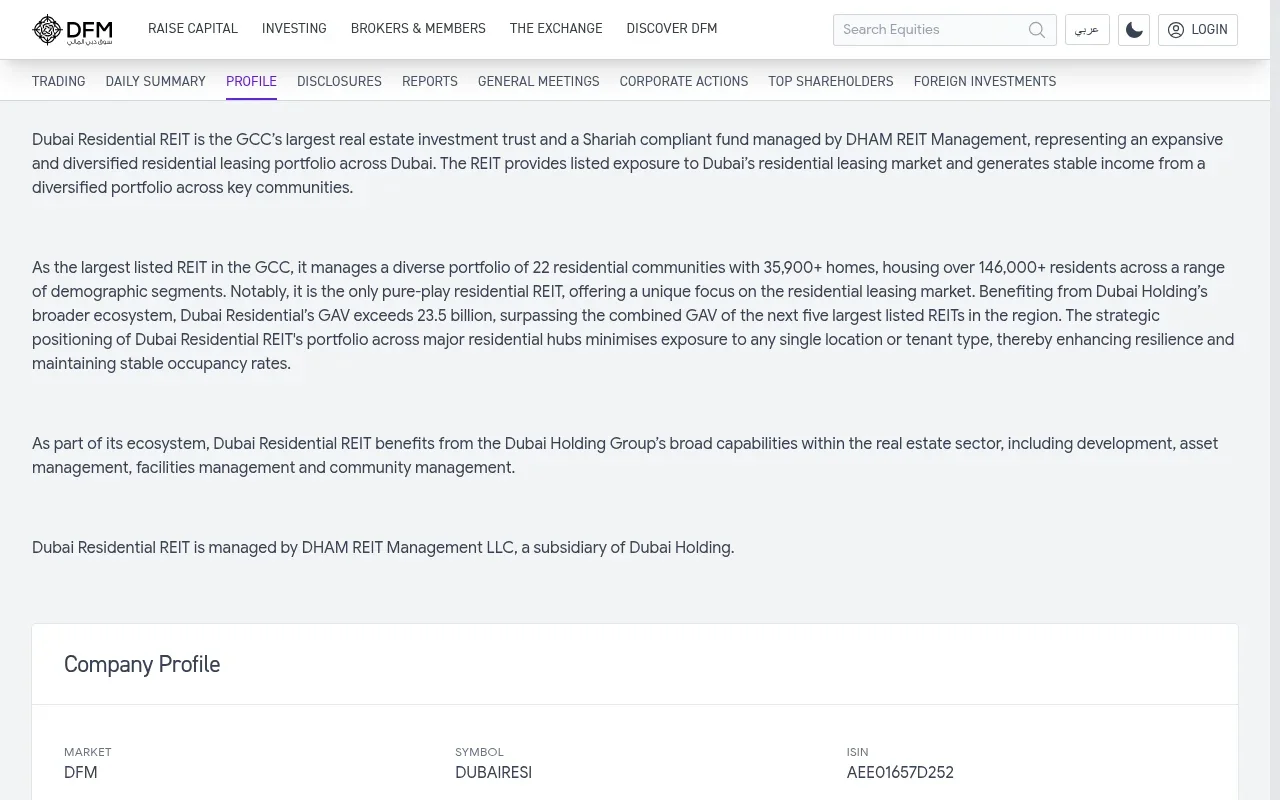
Listed UAE trusts do not all hold the same assets, and they do not all carry the same mandate. I ask buyers to read the specific fund prospectus to understand what they own. Dubai Residential REIT provides a clear example of residential concentration. Its mid-2026 disclosures detail a portfolio containing more than 35,900 homes spread across 22 communities. This provides a broad spread within the Dubai residential sector, which can mitigate the risk of a single bad tenant or a localised building defect. The trust remains heavily exposed to the overall performance of Dubai’s housing market.
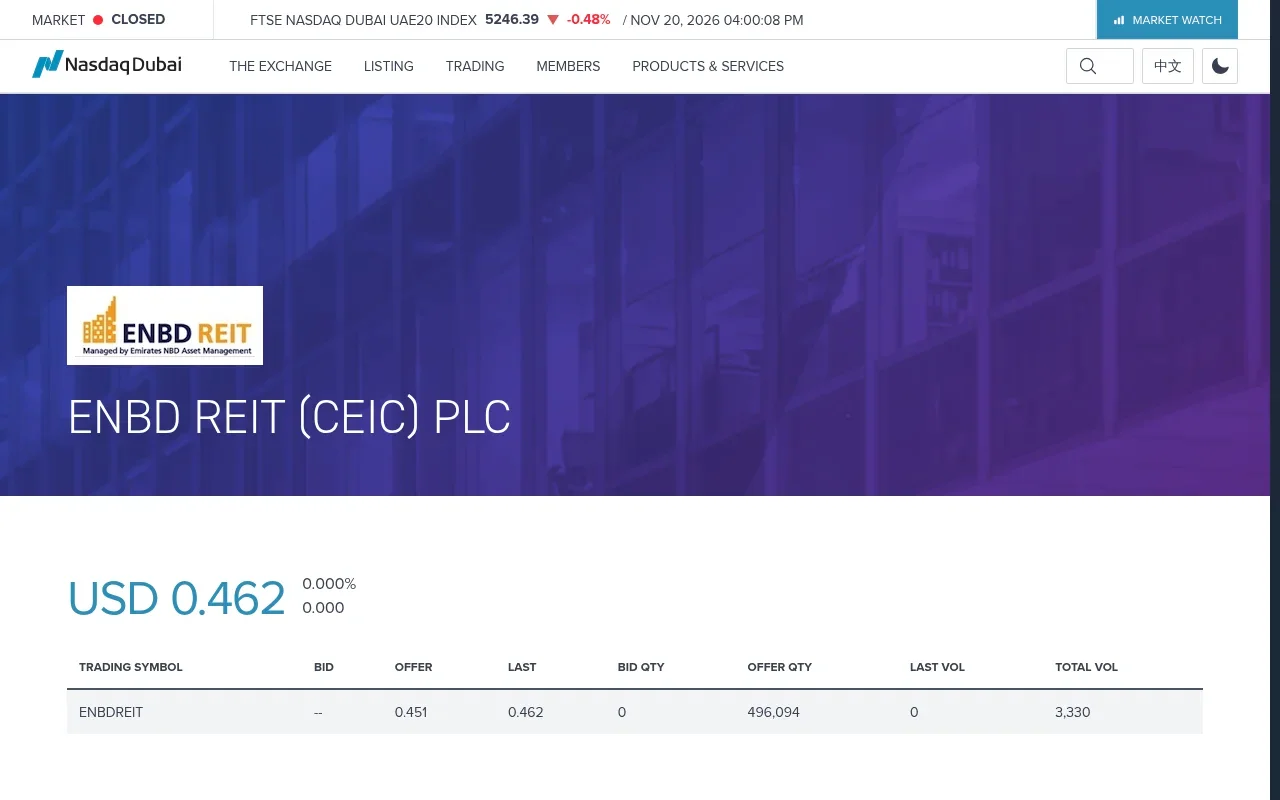
Other funds take a different approach. Al Mal Capital REIT, also listed on the Dubai Financial Market, targets income-generating assets across the broader UAE and GCC regions. Its mandate includes healthcare facilities and educational campuses alongside industrial sectors. Buying units in this trust allocates capital to commercial and institutional real estate across multiple borders. ENBD REIT, listed on Nasdaq Dubai, operates under another distinct mandate and regulatory framework.
These examples illustrate that a trust is an adaptable vehicle. A buyer’s exposure depends on the manager’s strategy. If the manager overpays for a commercial tower, the unit price reflects that mistake. If the manager secures long-term institutional leases, distributions may benefit from that stability. Investors hand over operational control in exchange for professional management and portfolio diversification.
What Direct Dubai Ownership Gives You
Direct ownership gives a buyer registered title and legal rights to a specific property, governed by the precise terms of the title deed and local property laws. This structure grants direct authority over the asset, subject to building regulations and tenancy laws.
A buyer chooses the specific community and floor plan. The owner decides whether to upgrade the kitchen to seek a higher rent. The owner also evaluates tenant offers and controls the final sale timeline. This control appeals to families who want to dictate the terms of their investment or plan to use the home themselves during the year.
That control comes with severe concentration. The buyer’s capital is tied to the success or failure of one specific asset. If major infrastructure work blocks access to the building, rental income suffers. If the owners’ association mismanages the sinking fund, service charges rise. The owner bears the direct consequences of asset-specific events.
When I evaluate buying off-plan property in Dubai, the distinction becomes sharper. Off-plan buyers acquire contractual rights through a Sales and Purchase Agreement before the building exists. I advise buyers to verify the developer’s track record alongside the escrow arrangements and delivery timeline. During the construction phase, capital is locked, and the property generates no rent. Comparing a projected post-handover yield against a current trust distribution ignores the distinct risk profile of the development period.

Comparing Liquidity and Capital Concentration
The differences between these allocations become clearest when I test them against a family’s liquidity needs and risk tolerance. I use a structured matrix to compare the structural realities of both options.
Decision point | Listed UAE REIT | Direct Dubai property | What I ask the reader to check |
|---|---|---|---|
What is owned | Units or shares in a fund with a defined portfolio. No title to a particular home. | Registered rights in a specific property, subject to the applicable ownership area and structure. | Does the family want portfolio exposure or a particular titled home? |
Liquidity | Can be traded through a broker on the relevant exchange. Execution depends on market activity. | A buyer must be found and the transfer completed. No continuous exchange quote exists. | What is the earliest date the capital might be needed? |
Control and use | The manager handles the properties. A unitholder cannot occupy a unit or choose a tenant. | The owner makes asset-specific decisions, subject to lease and building requirements. | Does personal use or tenant choice matter to the family’s plan? |
Concentration | May span multiple properties but remain concentrated by sector or geography. | Concentrates the investor in one unit and building unless multiple assets are held. | How much exposure does the family already have to Dubai residential property? |
Entry and exit costs | Broker and trading costs apply. Fund-level costs reduce the income available to investors. | DLD registration and service charges apply, alongside advisory and furnishing costs. | Compare all-in cash committed, not just the headline price. |
Income | Distributions follow the fund’s policy and results. They are not fixed or guaranteed. | Rent depends on the tenancy and operating costs. Gross rent is not net income. | Model the exact net cash returned after all localised costs. |
Remote responsibilities | The investor monitors disclosures and portfolio updates alongside trading volumes. | The owner manages oversight of tenants and service charges while handling property managers. | How much time can the family give to cross-border administration? |
Personal use or residency aims | A holding does not give the investor title to a home or property-linked residency rights. | A specific property may meet a residency objective if current official rules are satisfied. | Verify current visa eligibility separately before committing funds. |
Exchange access is not the same as guaranteed liquidity. An investor can place an order to sell listed units through a broker on the relevant exchange, but execution at the preferred price is not guaranteed. Thinly traded funds experience wide bid-offer spreads. An investor might see a reported NAV that looks healthy, but if market sentiment drops, the units may sell at a discount to that NAV. I ask buyers to check current trading volumes and market depth before treating any trust as a cash equivalent.
Direct property liquidity depends on finding a buyer. An owner cannot log into an app and liquidate five per cent of a villa. To sell, an owner prepares the property, conducts viewings, negotiates an offer and completes the administrative transfer process. A sluggish secondary market can leave capital trapped for months. The transaction process requires formal No Objection Certificates and a final transfer appointment.
Control directly affects workload. A fund manager handles leaking pipes and tenancy contract renewals. The manager also handles RERA rental index disputes. The unitholder remains passive. Direct ownership demands active management. Even if an owner hires a property manager, the owner retains responsibility for approving repair quotes and funding service charge accounts. The owner also makes final leasing decisions from overseas.
Measuring All-In Costs and Net Income
A fair comparison requires stripping away the marketing numbers. I do not compare an advertised gross rental yield for an apartment against a trust’s historical dividend yield. Both figures hide the true holding costs. I model net cash flow and total return under stressed conditions.
Direct Property Acquisition and Running Costs
When I budget for a Dubai property purchase, I account for costs beyond the purchase price. The Dubai Land Department lists a registration charge of 2% of sale value for the seller and 2% for the buyer. Its property sale registration guidelines also list a service-partner charge of AED 4,000 plus VAT for transactions valued at AED 500,000 or more. The schedule lists title deed and map issuance charges, which I include in my upfront budget.
Buyers often miscalculate the total cash required to close. These DLD charges sit apart from professional advisory costs. Combining the DLD charges with advisory and setup costs creates immediate acquisition friction. This sum often consumes 6% to 8% of the property value.

Annual running costs dilute gross rent. The owner must pay recurring service charges based on the square footage of the unit. The DLD Service Charge Index mandates costs for maintenance and security. It also requires master-community charges and mandatory reserve funds. I also include property management costs, which typically run between 5% and 8% of the collected rent.
I model severe downside scenarios before recommending a direct purchase. If a tenant vacates, the owner faces a void period with zero income while continuing to pay the service charges and utility standing rates. The owner pays leasing costs to find a new tenant and funds the repainting and minor repairs required to make the unit presentable. My rental property ROI calculator helps clients separate projected gross rent from the net cash that reaches their bank account. Gross yield is a theoretical metric. Net cash flow indicates how the investment is performing after costs. I also provide a free RERA rental index calculator and an ADVICEdge Advisor Check, so buyers can assess rental benchmarks and the advice they receive.
REIT Expenses and Distributions
Listed trusts operate with their own complex expense structures. The income generated by the underlying properties pays for the fund’s management and operations before any cash reaches investors. I ask buyers to evaluate the expense basis documented in the audited reports.
Dubai Residential REIT’s 2025 reporting outlines a semi-annual management charge equal to 10% of profit before tax, excluding gains from the fair valuation of investment properties. The structure includes specific offsets for services already compensated. The fund also states an intention to distribute at least 80% of profit before fair-value changes semi-annually from 2026 onward, subject to board approval.
These specific terms govern one entity rather than serving as universal rules for all UAE trusts. Distributions depend on the fund’s financial results and stated policy. They are never guaranteed. If the underlying properties face rising maintenance costs or falling occupancy, distributable profit shrinks. If the board decides to retain cash to acquire new assets or pay down debt, the dividend drops.
An investor’s total return relies on both the distributions paid and the movement of the unit price on the exchange. If an investor buys units at a premium and the broader market sells off, the capital loss can wipe out years of dividend income. I review the fund expense ratio alongside its debt profile and historical pricing gaps. I help clients analyse the underlying real estate fundamentals driving these trusts, though we do not execute securities trades or provide regulated financial advice on equities.
What Overseas Families Need to Verify
Non-resident Indian families and international buyers face distinct hurdles when allocating capital to the UAE. Physical distance amplifies the risks of poor due diligence. I ask buyers to verify the legal frameworks governing cross-border capital flow and property rights.
Dubai property ownership depends on designated zones. Law No. 7 of 2006 dictates that non-UAE nationals can hold freehold property rights or specified long-term leasehold rights only in areas determined by the Ruler. Buyers cannot select a random villa on a map and assume foreign freehold ownership is permitted. I ask them to verify the exact plot and the specific right being offered. My guide on buying property in Dubai for foreigners outlines the distinct zones and the required registration procedures.
Tax residence determines reporting obligations. I ask buyers to confirm their exact tax status for the relevant financial year rather than rely on a general understanding of NRI rules. The treatment of trust distributions and direct rental income varies by jurisdiction, as does the tax treatment of gains from an overseas property sale and from selling listed foreign securities.
Funding the purchase requires strict compliance with foreign exchange regulations. I advise buyers to use permitted banking channels and provide the required documentation to satisfy anti-money laundering checks in both jurisdictions. Currency conversion costs and fluctuating exchange rates directly affect the final acquisition cost and the value of repatriated income.
Residency objectives complicate the decision. Direct property ownership can qualify an investor for specific UAE residency visas, provided the purchase meets the strict financial thresholds and conditions active at the time of application. Buying units in a listed trust does not grant title to a home, and it does not satisfy the requirements for a property-linked visa. If long-term residency forms part of a family’s strategy, I advise verifying the current official eligibility criteria independently before deploying capital.
Evaluating Holding Periods and Downside Risks
I ask families to match each allocation to their time horizon and capacity to manage risk, because no universal winner exists. The right choice depends on the specific friction a family is willing to absorb. I use ADVICEdge to assess that fit.
A listed trust merits closer analysis when a buyer wants divisible exposure to a managed real estate portfolio but cannot commit the capital required for a full property purchase. It suits investors who value the mechanism of exchange liquidity, even with the risk of market-driven price volatility. Investors avoid the heavy DLD transfer costs and void periods. They also avoid the operational demands of managing a tenant from 6,000 kilometres away. They accept that they hold no direct control over the assets and that execution at their target price relies on market depth.
Direct property merits closer analysis when a buyer demands control over the asset or intends to use the property personally. It can also suit a family seeking a specific yield profile in a targeted community. It suits families who can absorb the 6% to 8% acquisition friction and plan to hold the asset long enough to amortise those costs. They accept the illiquidity and concentration risk alongside ongoing operational demands. These burdens come with registered title and direct authority.
If a family already owns substantial direct real estate in Dubai, adding more physical units increases its concentration in an illiquid asset class. I recommend a rigorous Dubai property market analysis to determine whether adding another apartment benefits the portfolio or repeats a familiar habit.
If neither route meets a family’s liquidity constraints or downside tolerance, waiting remains an effective strategy. Walking away from a poorly aligned investment protects capital better than forcing a decision.
I ask buyers to run this final checklist before committing funds to either route:
- Verify the holding period: Define exactly when the capital will need to be liquidated. If the timeline is under five years, the acquisition costs of direct property make profitability extremely difficult.
- Check the cash reserve: Confirm there are liquid funds available to cover the DLD charges, furnishing costs, and a six-month vacancy period for a direct property. Otherwise, ensure the family can weather a prolonged dip in a trust's unit price.
- Confirm the intended use: If anyone in the family plans to live in the asset or use it for visa eligibility, direct property remains the sole viable path.
- Assess existing concentration: Map current exposure to the Dubai real estate market. Ensure a new purchase does not unbalance the broader wealth preservation strategy.
- Calculate the true net costs: Strip away the gross yield projections. Model the exact net cash returned after service charges, management costs, and fund expenses.
- Define the downside scenario: Document what happens to the capital if the property sits empty for a year or if the trust suspends its dividend.
I evaluate portfolio allocations for overseas buyers by prioritising liquidity needs and risk thresholds ahead of market inventory. The choice between listed trusts and physical property depends entirely on the specific frictions you are willing to absorb and the duration of your holding period.
Please book a no-obligation intro call through Ritu Kant Ojha Real Estate Advisory to discuss your UAE property allocation.
Ask Ritu Kant
Have a question about your purchase? Ask me directly.
Tell me what you are considering. I read every message myself and reply within one working day.