I Treat Handover as an Asset-Readiness Check
A Dubai property handover inspection is a formal asset-readiness check that records construction defects before you accept the unit. Under Article 7 of Dubai Law No. 6 of 2019, developers hold a one-year liability for mechanical and electrical installations from the date of handover. Identifying these issues immediately establishes your baseline for enforcing necessary repairs.
For buyers making property decisions in 2027, treating key collection as a ceremonial exchange introduces severe financial risk. A defective unit delays your realistic rental start date, forcing you to carry service charges and mortgage interest on an empty apartment. This article outlines the systematic inspection protocol needed to audit your physical unit against its contractual specifications.
Each day an apartment remains empty while contractors rectify basic oversights adds to the owner's carrying costs and delays rental income. When you buy an apartment off-plan in areas like Business Bay, Downtown Dubai, or Dubai Marina, your cash-flow model assumes a definite completion window and a subsequent tenant move-in date. If you accept a defective property without a structured record, that timeline stretches. You begin paying service charges, cooling capacity charges, and mortgage interest from the moment of legal completion, yet you receive zero rental income while pursuing repairs.
My advisory approach at Proact Luxury Real Estate rests on evidence. I apply the five-point ADVICEdge framework, which includes alignment, depth, voice, integrity, and compassion, to the handover process. Alignment means evaluating the property against your financial strategy rather than reviewing only the paint. Depth requires comparing the physical unit with the contracted specification. Voice means telling you when a property is not ready to let. Integrity involves recording what is untested rather than guessing that it works. Compassion recognises the real anxiety an overseas buyer feels when managing a multi-million dirham acquisition from 6,000 kilometres away. You can evaluate your own position using our ADVICEdge Advisor Check before initiating your handover communications.
An off-plan handover differs from buying a completed property in the secondary market. When acquiring a secondary unit, you conduct pre-contract due diligence to decide whether to purchase. The Dubai Land Department investor publication detailing completed property inspection guidance recommends evaluating the asset before signing the sale agreement. An off-plan handover occurs after you have funded the construction. Your objective shifts from evaluating a purchase to enforcing a delivery contract, recording defects, and establishing a baseline for the developer's liability. I use a structured Dubai handover inspection checklist to secure that baseline. For a broader context on developer milestones and contracts, review our guide to off-plan property due diligence.
My Dubai Handover Inspection Checklist: What I Check
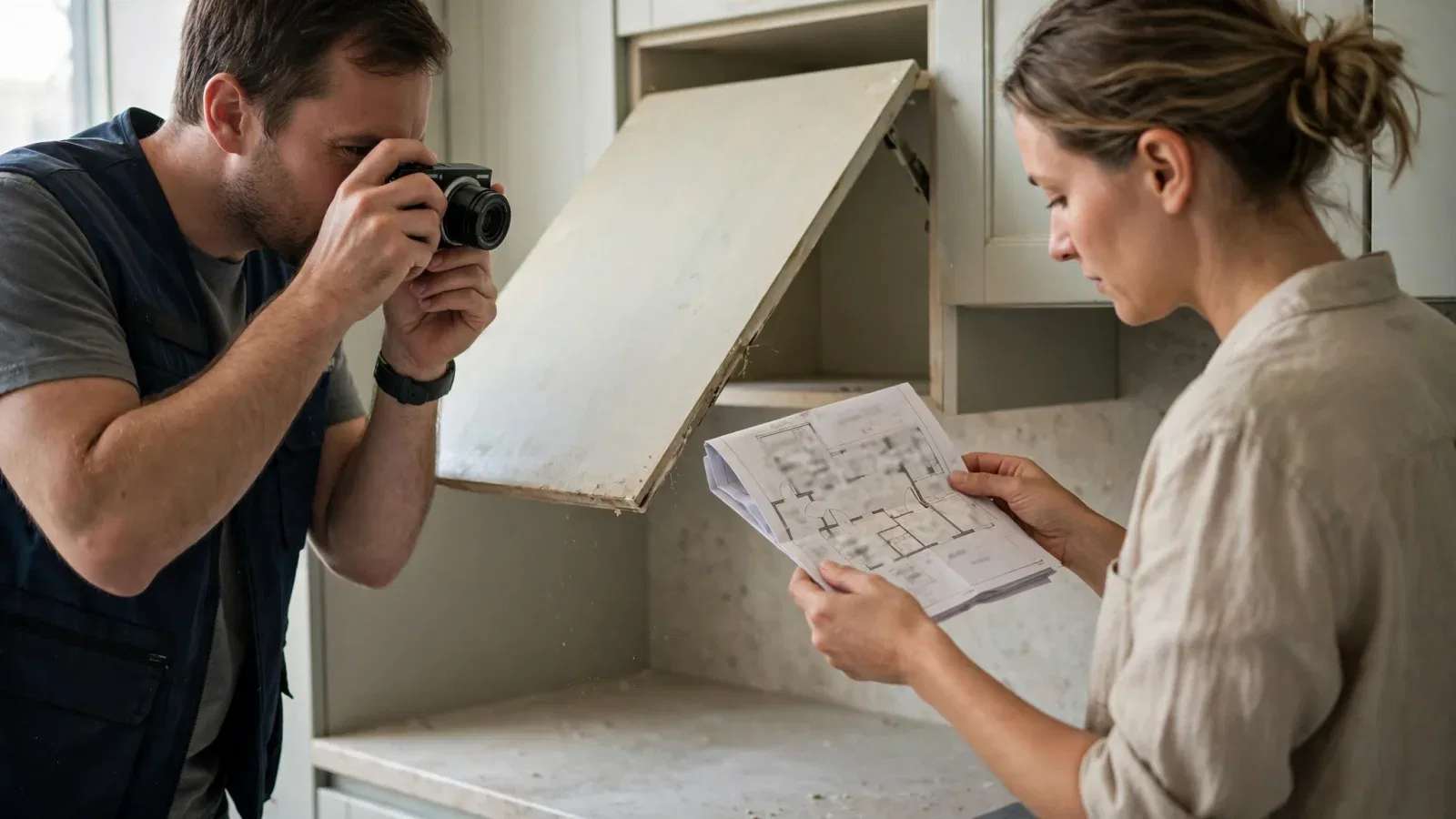
Before walking through the door, I assemble the baseline documents. I compare the delivered unit against the signed sale and purchase agreement, the approved floor plan, the finish schedule, and the list of included items. This preparation turns a vague walkthrough into a precise audit. I mark each check on my list as satisfactory, a defect, or not tested. This record serves as a practical working tool for the investor rather than an official regulatory form.
Many buyers arrive at a site handover with nothing more than a smartphone camera. That approach can weaken the evidence they hold. The site team works from construction tolerances and handover targets, whereas I ask buyers to compare the unit with the exact contractual annexures they signed years earlier. When an agent promises high-end European marble or integrated German appliances during the marketing phase, that promise means nothing unless it appears in the contract schedules. If the developer substitutes lower-grade local tiles or generic kitchen fittings, I can identify that deviation by checking the approved finish schedule against the room.
Confirm the Unit and Its Agreed Specification
I begin by confirming the absolute basics. I verify the building name, the unit number, the floor level, the layout, and the orientation against the approved floor plan. I check the allocated parking bay and the designated storage space against the sale documents, recording any discrepancies immediately. I also look for missing items or unapproved material substitutions.
Orientation and layout errors happen more frequently than many buyers realise. In large multi-tower developments, identical floor plans are mirrored across eastern and western wings. I have seen instances where an owner was delivered a unit facing an interior courtyard instead of the open canal view specified in their contract. I cross-reference the architectural drawings, checking column positions, balcony door placements, and the view axis from the primary living space. I also confirm that the ceiling heights match the floor section drawings and that ceiling bulkheads do not intrude awkwardly into wardrobe openings or window heads.
I check the allocated parking bay on the basement or podium level before signing any documentation. I verify that the bay number stencilled on the asphalt corresponds exactly to the parking allocation addendum in the contract. Where necessary, I ask the owner or representative to park a vehicle or measure the space. A bay obstructed by a structural pillar, a drainage pipe, or a fire door exit route can devalue the unit for future tenants. If the purchase included a private basement storage room, I inspect that cage or room for dampness, operational lighting, and secure ironmongery.
If the apparent area of the unit appears visibly smaller than the agreed area, I document the observation and advise obtaining the relevant measured-area documentation. The Dubai Land Department addresses area shortfalls directly. Its published guidance states that a developer must compensate the buyer if the decrease exceeds five percent of the net area. I clarify to owners that this provision does not establish a general tolerance for poor construction. A visual walkthrough does not constitute a legally binding area measurement, meaning an official survey remains necessary if a dispute arises. The net area recorded on the title deed excludes common shafts and perimeter walls, so any formal claim must be backed by official measurement rather than a casual tape measure reading.
Inspect Finishes, Windows, Joinery and the Balcony
The finish inspection requires systematic attention to detail. I scan the walls and ceilings for cracks, stains, damp marks, damaged paint, and uneven plasterwork. I inspect the flooring for chipped tiles, cracked grout, or uneven surfaces that suggest poor subfloor preparation. I open and close every internal door, checking that the hinges hold the weight, the latches engage smoothly, and the frames sit flush with the wall.
Plaster and paint issues can hide more serious problems. Hairline surface cracks in drywall partitions can simply indicate building settlement, but diagonal cracks extending from door frames or window lintels require careful recording. I look closely at the ceiling perimeters, especially where plasterboard meets concrete slabs. Shadow gaps should run straight and uniform without bowing. I shine a light across the wall surface at an acute angle to expose poor skimming, roller stipple, and uneven sanding that look flat under direct daylight but appear prominent once evening interior lighting is switched on.
I tap the floor tiles as part of the inspection. A hollow sound beneath a porcelain or marble tile can reveal poor adhesive coverage, commonly known as drummy tiles. Over time, walking pressure or temperature fluctuations can cause these tiles to crack or lift, leading to costly disruption when a tenant is in residence. I run my shoe across every grout line to identify lippage, where one tile edge sits higher than its neighbour. I check the skirting boards along every wall. Gaps beneath the skirting or unsealed joints can allow water to seep behind walls during floor washing, leading to mould growth in skirting MDF.
Windows and balcony access points demand careful scrutiny. I check the visible glazing for scratches or cracks, examine the frames for alignment, and press the rubber seals to ensure they remain seated. I operate the locks, slide the balcony doors along their tracks, and look for visible drainage concerns on the balcony floor. A visual check can identify standing water or blocked drain covers, though it does not test the underlying waterproofing membrane.
I examine the thermal breaks and rubber gaskets around all exterior window aluminium. In Dubai, high summer heat can cause inferior seals to perish rapidly, leading to dust ingress and cooling loss. I check the sliding tracks of heavy balcony doors for smooth gliding and proper alignment with the frame catch. I ensure the weep holes in the aluminium sill tracks are clean and free of construction debris so that condensation or winter rainwater drains outward rather than backing up onto the living room floor. On the balcony, I check the handrail rigidity with care, without applying force that could risk injury or damage. I inspect the balustrade glass for chips, scratches, or missing securing clamps.
In the kitchen and bathrooms, I examine the joinery. I open cabinet doors, pull out drawers, and test the soft-close mechanisms. I run my hand along the worktops to check the seams, inspect the visible silicone seals around sinks, and verify that any installed appliances match the included items list in the agreement.
I check cabinet carcases for level installation and proper wall anchoring. I look inside the sink base cabinet for signs of water pooling or unsealed plumbing penetrations. I open every drawer fully to ensure it clears adjacent handles and oven doors without collision. Where quartz or granite countertops join, the seam should be razor-thin, smooth to the touch, and filled with colour-matched epoxy. I inspect the underside of hanging wall cabinets to verify that under-cabinet LED task lighting is properly installed, shielded, and operational.
Test Plumbing, Air Conditioning, Electrical Items and Fixtures
Testing the mechanical and electrical systems reveals whether the unit can function for a tenant. Where utilities are active, I turn on the taps and showers. I observe the water pressure, check for the presence of hot and cold water, and watch the drainage speed. I flush the toilets and inspect the visible pipework under sinks for immediate leaks. If the building has not connected the water supply, I mark these checks as not tested.
Water pressure in high-rise towers can fluctuate between lower and upper floors. I run multiple taps simultaneously while flushing the toilet to evaluate whether the pressure drops severely. I check the temperature response of the mixer valves. In Dubai, hot water systems often feature individual ceiling-mounted water heaters with their own isolator switches and pressure relief valves. I look for the isolation switch outside the bathroom and confirm that water reaches a functional shower temperature within a few minutes. I check that the shower rose and handheld wand switch cleanly without spraying water from the hose connections.
I inspect floor gullies and drainage traps throughout the wet areas. I pour water directly down floor drains in the bathrooms, laundry room, and kitchen, then watch how quickly the water clears. If water ponds around the drain grate or drains sluggishly, construction workers may have washed tile grout, plaster, or paint down the waste lines, creating stubborn subterranean blockages. I inspect the flexible supply hoses beneath washbasins and kitchen sinks. I check that they are not kinked, twisted, or showing signs of weeping around the threaded brass nuts.
Air conditioning performance heavily influences tenant retention in Dubai. Where commissioning and active utilities permit, I run the cooling system. I adjust the controls, check each room for airflow, listen for unusual mechanical noise, and look for water dripping from the ceiling vents. An unresolved cooling problem directly blocks the expected start of rental income.
For a fuller check, I turn the digital thermostat down to 18 degrees Celsius and let the fan coil unit run on high for at least thirty minutes while I continue inspecting finishes. I feel the air velocity and temperature exiting the supply grilles in each bedroom and the living room. I use a digital surface thermometer if available to check that the supply air is noticeably cooler than the ambient room air. I listen for excessive vibration, whistling ductwork, or grinding blower motors above the false ceiling.
I inspect the ceiling access panels beneath the fan coil units. I look inside to check whether the primary drain pan contains standing water, which indicates improper fall or a blocked condensate line. A blocked condensate drain can eventually overflow, soak through the gypsum ceiling board, and cause a ceiling collapse, destroying furniture and prompting an emergency tenant dispute. If the building cooling infrastructure uses a district cooling provider like Empower or Tabreed, I confirm whether the thermostat activates the chilled water modulating actuator valve properly.
Electrical testing covers the accessible fixtures. I operate the lights, flick the switches, and check the sockets. I record any non-working fittings and ensure the installed fixtures match the agreed schedule. I also check for missing appliance details, operating manuals, and warranty information. I do not open electrical distribution panels or manipulate life-safety equipment, because those tasks belong to qualified technical professionals.
I recommend that a qualified professional use a standard socket tester to check every electrical outlet for correct polarity and proper grounding. In fast-tracked construction projects, electricians can wire sockets with reversed neutral and live wires, creating an electrical safety hazard for future occupants. I switch on all decorative and recessed light fixtures, checking that matching bulbs share identical colour temperatures and that dimmer switches function without causing LED flicker. I inspect the distribution board exterior to verify that every circuit breaker is clearly labelled with its corresponding zone, such as kitchen sockets, living room AC, or master bedroom lighting. I leave any test of the main residual current circuit breaker to a qualified professional.
Separate Shared-Area Issues from Unit Snags
I keep a distinct boundary between the private unit and the common property. I record concerns regarding the lifts, the residential corridors, the main lobby, the parking access gates, and the shared leisure facilities in a separate log. I route these shared-area observations directly to the developer or the appointed building management company. Mixing common-area defects with the private snag list can delay the handover of an individual unit.
When buyers mix building issues into their personal snagging report, they create procedural friction. The developer's handover supervisor manages private apartment rectifications through dedicated internal trades like painters, joiners, and plumbers. Common area systems like lift programming, corridor air conditioning, swimming pool pumps, and facade cladding fall under the master contractor or the owners association management firm. If a buyer makes unit handover conditional on the developer repainting the service corridor or fixing the basement boom barrier, the handover team may reject the form.
I maintain a separate page in the inspection dossier for communal defects. I note damaged lift car interiors, unsealed fire escape doors, stained corridor carpets, broken access readers, or absent fire extinguishers. I submit this list to building management with a copy to the developer's customer care division. By keeping the private snag report focused solely on the net unit area, I keep the repair schedule focused while maintaining an audit trail of common property standards.
I Track Each Snag Until It Is Verified
A disorganised folder of property photographs can fail to secure developer action. I make every defect a traceable item. This structured approach prevents minor repairs from disappearing into a prolonged email chain, allowing the owner to manage the rectification process logically.
Contractors and customer care agents process hundreds of handovers every month. If an owner submits forty loose images via a messaging app or hands over an unformatted PDF document, individual items can get lost or dismissed. Site foremen may select simple cosmetic fixes, such as touching up a paint scuff, while overlooking complex defects like a vibrating AC fan or a leaking waste pipe. To reduce this risk, I impose order on the process from the first submission.
I use a reusable snag-register table to track the lifecycle of every identified issue and maintain control over the process.
| Item ID | Location | Observation | Evidence File | Priority | Notice Trail | Follow-up Party | Retest Result | Status |
|---|---|---|---|---|---|---|---|---|
| U-01 | Kitchen | Cold water tap leaks at base | 20261016_Kit_01.jpg | Use-blocking | Reported 16 Oct, Ticket #442 | Developer FM Team | Pending | Open |
| U-02 | Bed 1 | AC thermostat unresponsive | 20261016_Bed_AC.mp4 | Use-blocking | Reported 16 Oct, Ticket #443 | Developer MEP Contractor | Pending | Open |
| U-03 | Living | Scratch on balcony sliding door | 20261016_Liv_04.jpg | Cosmetic | Reported 16 Oct, Ticket #444 | Handover Team | Pending | Open |
| U-04 | Bath 1 | Water supply off, unable to test shower | N/A | Safety/Use | Reported 16 Oct, Ticket #445 | Building Management | Pending | Not Tested |
I label priority as an internal triage tool. I categorise issues as active damage concerns, use-blocking defects, safety hazards, or cosmetic snags. These labels help owners decide which problems to press immediately and which can wait, but they do not represent official regulatory classifications. My suggested statuses include open, acknowledged, repair scheduled, repair reported, and closed.
Prioritising items protects the rental schedule. A scratched baseboard or a tiny blemish in the paintwork is a cosmetic item. It does not stop a tenant from moving into the property, and the owner can negotiate a rectification timeline or minor credit without losing four weeks of occupancy. In contrast, an unresponsive AC thermostat, a leaking waste pipe behind the kitchen counter, or a malfunctioning front door lock is a use-blocking defect. A paying tenant should not move into an apartment without functional cooling or basic security. By categorising these items, I help direct the contractor's immediate labour towards the problems that threaten rental commencement.
I advise owners to send this record through the developer’s stated communication channel. I recommend requesting a written acknowledgement and retaining the original report alongside all responses and updated versions. I ask owners to check the sale agreement, the handover documents, and the written developer procedure to understand their specific timeframes. I advise against relying on casual discussions with site workers who have no authority to bind the company. Every interaction should tie back to an official ticket number, an email confirmation, or an endorsed handover document.
I never treat a verbal assurance from a site supervisor as proof of repair. The relevant function requires a physical retest where possible. Contractors can apply quick cosmetic cover-ups instead of resolving root causes. I have seen painters paint over damp plaster without fixing the weeping valve inside the duct riser, only for the water bubble to burst through the emulsion three weeks later. Similarly, a technician might push an AC reset button to demonstrate airflow, even though the compressor trips the breaker under twenty minutes of continuous load. I retest every repaired item with the same rigour I apply during the initial walkthrough.
Because I distinguish a visual walkthrough from a technical diagnosis, I advocate bringing in specialised help if I suspect concealed issues involving water ingress or faulty mechanical systems. Thermal imaging cameras can reveal wet insulation behind ceilings that looks dry to the naked eye. Acoustic sensors can locate pipe leaks buried inside concrete screeds. You can read more about the value of a snagging and technical inspection when evaluating high-value assets and spotting hidden technical liabilities. I help buyers assess what the available evidence can establish and where a qualified technical professional is needed.
How I Manage a Remote Handover
Overseas buyers face a distinct logistical challenge. Managing a handover from London, Singapore, or Toronto requires precise delegation. I do not advise relying on a friendly broker who takes a quick video and collects the keys. I recommend a structured remote protocol to protect the investment.
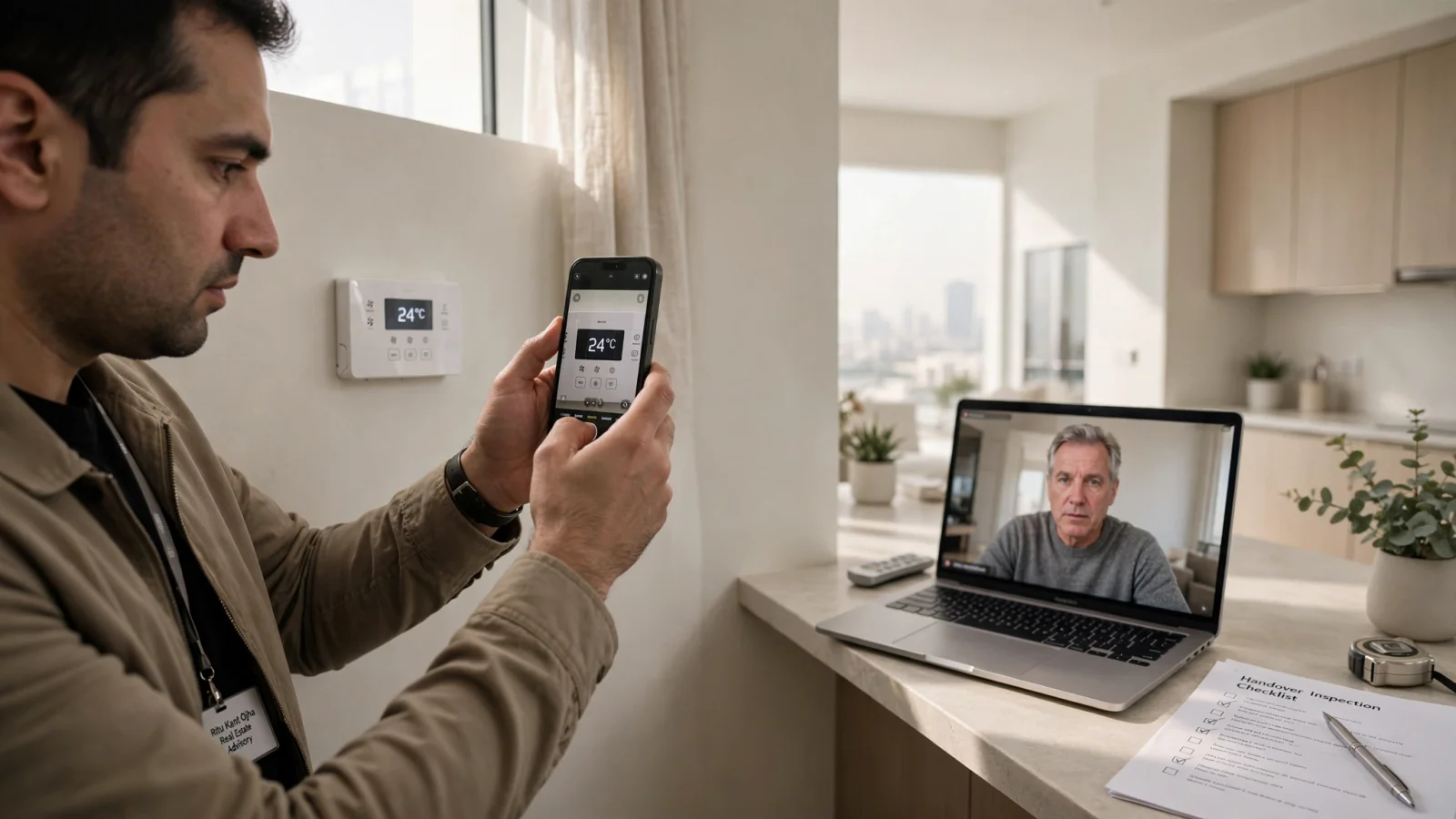
When you purchase real estate from abroad, you operate at an information disadvantage. Handover teams know that an absent owner may be under pressure to complete the transaction, clear outstanding balances, and avoid travel costs. Some developers present handover as an administrative formality that must be concluded rapidly. If you delegate this process to an untrained individual, you may sign off on a flawed asset. A proper remote protocol can level the field by creating an auditable paper trail.
I set out a practical sequence for a non-resident owner who cannot attend the handover appointment in person. First, I ask the owner to confirm the developer’s procedure and accepted authorisation format for a representative well before the date. I do not assume a standardised power of attorney covers the handover requirements, as many developers enforce specific in-house authorisation forms. Some developers accept a notarised proxy letter accompanied by passport copies, whereas others insist on a formal power of attorney registered through the Dubai courts or attested by the UAE embassy in the owner’s home country. Clarifying this requirement six weeks prior to scheduled completion can prevent last-minute administrative delays.
Next, I ask the owner to share the signed agreement, floor plan, finish schedule, and included-items list with the representative. I also ask owners to assess the inspector's objectivity, including any developer or sales affiliation, and to appoint a qualified technical professional for concerns beyond a visual check. The representative must act solely in the owner’s financial interest, unburdened by relationships with the master developer or the agency that sold the off-plan contract.
I instruct the representative to confirm the physical unit identity before starting. They need to capture dated, room-by-room wide shots to establish context, followed by close-up photographs of every defect. While a live video call helps the owner understand the space, a shaky phone camera over a weak cellular connection does not replace a static, high-resolution photographic record. The photographs must include wide shots that show the room number, door frame, or distinct architectural feature alongside the defect. This photographic context can prevent the contractor from claiming that a specific crack or broken tile belongs to a different apartment.
When services remain unavailable during the inspection, I ask the representative to mark them as not tested and arrange a return visit when the utilities are connected. Connecting utilities like Dubai Electricity and Water Authority (DEWA) or district cooling accounts often requires the buyer to register ownership, pay advance deposits, and settle administrative clearance charges. If these accounts are inactive on inspection day, I advise the inspector not to record the air conditioning or plumbing as operational. A formal not-tested notation protects the owner’s right to demand re-inspection once the meters are energised.
I advise owners to submit the snag record through the stated developer channel, keeping the acknowledgements and the repair follow-up trails neatly filed together. I recommend establishing a designated cloud folder containing the original inspection report, every high-resolution photo, all timestamped email communications, and developer response letters. When chasing updates, the owner should refer strictly to the unique item IDs from the snag register. This professional discipline signals to the developer that the owner is running an audit rather than submitting casual customer complaints.
I tell clients to examine the handover form carefully. I advise them to submit or attach the defect list where the procedure permits. I do not assume that signing a standard key-release document necessarily waives the owner’s rights, nor do I assume that it preserves them perfectly. I advise against unilateral action like withholding a final payment without understanding the consequences. The owner should obtain qualified legal advice before taking a definitive position on acceptance or payment schedules. Some handover forms contain broad liability release clauses stating that the buyer accepts the property in pristine condition and discharges the developer from all finish obligations. If the developer's staff refuse to allow an addendum, the owner needs legal guidance on how to record a written protest without defaulting on the purchase terms.
Proact Luxury Real Estate provides structured guidance for investors preparing to lease their units, including access to our tenancy agreement template. Before reaching the leasing stage, I can support an absent owner with an organised post-completion handover inspection and a clear follow-up trail. I coordinate the evidence gathering while making clear that technical diagnosis and legal advice belong with appropriately qualified professionals.
How I Read Dubai’s Defect Rules
A practical snag list and statutory liability are distinct concepts. The defect register helps manage the immediate repair cycle, while the law defines the developer's long-term obligations. I reviewed the legal material against official Dubai legislation sources on 16 October 2026 to clarify these boundaries. I ask property owners to record both the project completion-certificate date and the individual unit handover date, because the law treats these milestones differently.
Many investors confuse contractual warranties with statutory rights. When buyers collect their keys, the developer might hand them a customer care brochure promising thirty days of snagging support. That thirty-day window is a developer customer-service policy, not a statutory cap on legal protections. Conversely, some buyers assume the law obliges a developer to fix chipped kitchen cupboards or scuffed paint for a decade. Understanding where statutory law begins and where it ends can prevent costly legal miscalculations.
Article 40 Uses Different Timelines for Structural Parts and Installations
I rely on Article 7 of Dubai Law No. 6 of 2019 because it lists structural supports, foundations, columns and structural walls among the common parts of a jointly owned building.
Structural parts refer to the load-bearing bones of the development, including the foundation pilings, structural concrete columns, shear walls, retaining structures, and structural slabs. If serious structural movement, concrete spalling, or foundation subsidence threatens the building within a decade of project completion, the law places the rectification liability directly on the developer. I note that this clock begins on the date the master project receives its building completion certificate from the municipality, not on the date you complete your purchase or collect your keys.
The timeline shifts for internal systems. The developer's liability for defective mechanical, electrical, sanitary, and sewerage installations runs for one year from the handover of the unit to the owner. If the owner refrains from taking possession, the law states that this one-year period begins from the project completion certificate.
This timing distinction represents a critical edge case for overseas investors. If an overseas owner delays taking delivery because of travel scheduling, disputes over final payments, or administrative neglect, the clock does not stop. If the project completion certificate was issued in January, but the owner delays collecting the keys until November, the statutory one-year installations warranty does not extend to November of the following year. By delaying possession, the owner may compress the effective warranty window down to a couple of months.
I stress to investors that this legal provision is not a blanket warranty for cosmetic finishes, chipped paint, or loose cabinet handles. It specifically names structural parts and installations. Its applicability depends entirely on the ownership structure and the specific building arrangement. I advise owners not to rely on Article 40 to force a developer to replace a scratched floor tile eighteen months after they collect the keys. Cosmetic defects must be captured on the initial snag list before or at the time of key collection. Once an owner signs off on the cosmetic delivery, proving that a scratch, chip, or dent was caused by the developer rather than their own removal contractors or tenant becomes almost impossible.
Escrow Retention Is Not an Individual Right to Withhold Payment
I rely on Article 14 of Dubai Law No. 8 of 2007, which requires the account trustee to retain five per cent of the total value of the project escrow account after the developer receives a completion certificate. I confirm that the retention cannot be paid to the developer until one year has passed from the date the units are registered in the purchasers' names.
The Dubai Land Department states that Law No. 8 of 2007 became effective on 28 June 2007. In its official publications, the department explains that this retained amount acts as a guarantee against defects apparent at completion or arising within a year after handover. The regulatory mechanism protects the building as a whole by ensuring that capital remains locked in the project escrow account to remediate unresolved major faults if the developer fails to perform.
I make this distinction clear. This law governs the project escrow funds held by the trustee, meaning it does not give an individual buyer an automatic right to withhold five per cent of their final contractual payment. I warn buyers that attempting to deduct funds from the final handover instalment based on this law risks breaching the sale agreement and delaying possession.
When a buyer unilaterally withholds funds from the final completion instalment, the developer's automated accounting system flags the account as non-compliant. The developer can legally refuse to issue the certificate of completion, decline to hand over the keys, and levy contractual late payment penalties. Furthermore, the developer may withhold the clearance papers required by the Dubai Land Department to issue the final title deed. I advise buyers to respect the boundary between project-level escrow regulation managed by the banking trustee and their personal contractual payment obligations under the signed sale agreement.
I Decide When a Unit Is Ready for My Portfolio
The handover process concludes when I determine the asset is ready to generate returns. I close the inspection phase with a practical readiness check, consolidating the data to build a complete picture of the property's operational status.
A successful property investment relies on disciplined execution at the transition point between construction and leasing. When an owner treats key collection as an administrative formality, unresolved construction defects pass to the incoming tenant. That creates friction immediately. The tenant may discover that the water heater trips the power, the balcony door fails to lock, and the air conditioning fails to cool the bedroom. Within two weeks, the tenant may withhold rent, submit complaints to the rental dispute centre, and demand lease cancellation. By running a thorough asset-readiness check, I help protect the owner's professional reputation as a landlord and their cash flow.
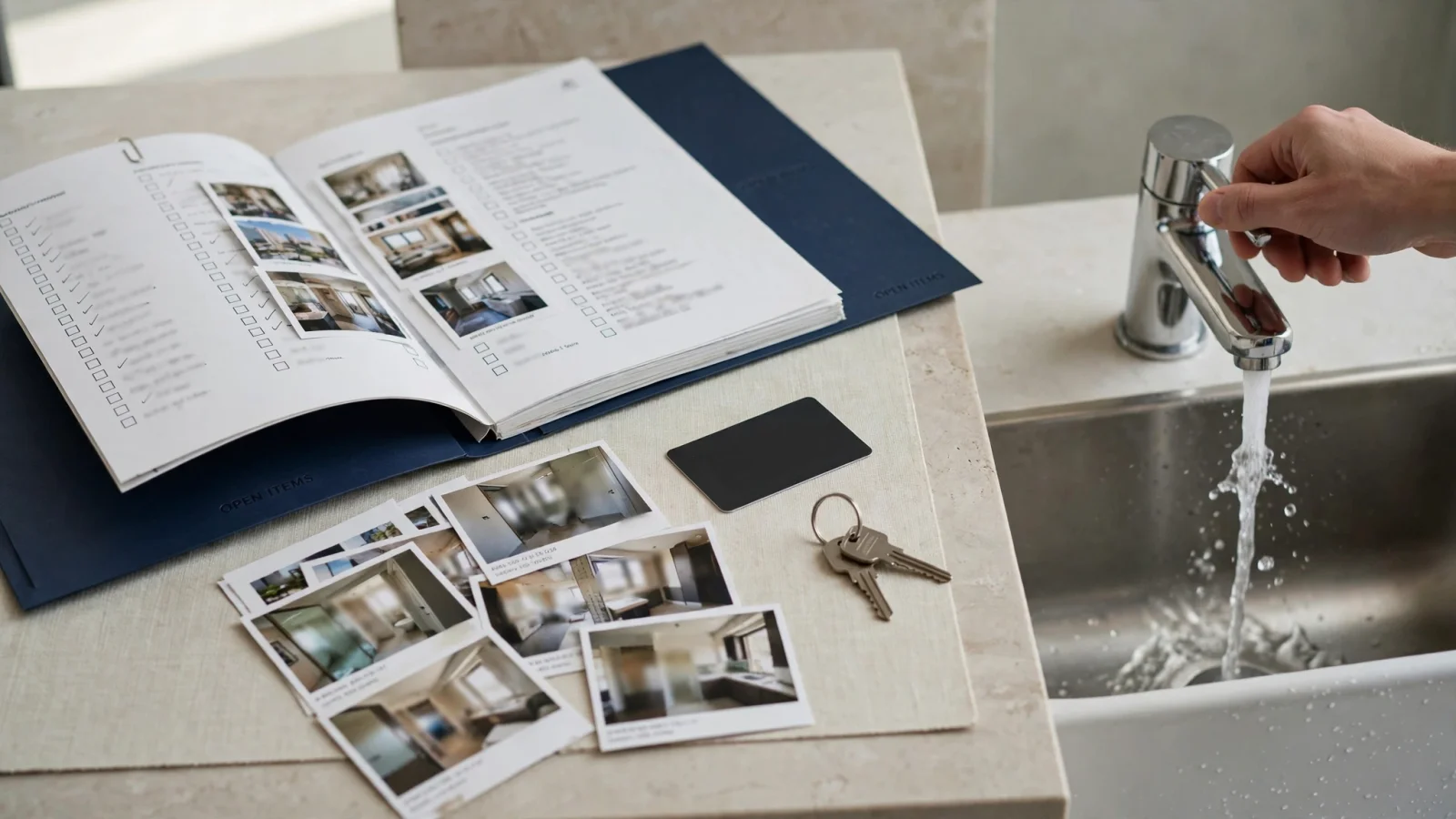
I list the unresolved work that actively affects safe use or letting. I record the next required action, name the responsible party, and highlight any services that remain untested due to utility disconnections. I audit the physical items received, ensuring I hold the correct keys, the assigned building access cards, the appliance details, the operating manuals, and the manufacturer warranties.
I check every access fob against the parking barrier gates, the main pedestrian entrance, the lift destination controllers, and the gym facilities. I make sure the owner receives two or three complete sets of physical keys for the main entry, internal bedrooms, and utility cupboards. I gather every warranty card for the cooker, hob, dishwasher, washing machine, and AC compressor units. I file these documents alongside the contact numbers for the developer's facilities management helpdesk, building security, and the emergency chiller maintenance provider.
I then ask the owner to estimate the required repair spending and project the likely date the unit can be offered for rent. I present both sides of this scenario clearly. A dated, itemised record makes developer follow-up clearer and protects the owner's position, yet a snag list cannot prevent every future dispute or eliminate all hidden defects. Unresolved functional issues delay the letting timeline, meaning the owner continues to carry service charges and mortgage costs without offsetting rental income.
Every month of delay reduces annual net yield. If the owner pays an annual service charge of 18 dirhams per square foot on a 1,000 square foot apartment, the carrying cost for common building maintenance is 1,500 dirhams per month. Add an ongoing mortgage instalment and district cooling availability fees, and an unrectified defect sitting idle for ninety days can cost over 15,000 dirhams in holding expenses, completely separate from delayed rental income. Owners can model how repair downtime, vacancy periods, and ongoing maintenance charges compress their net yield after costs before deciding whether to sign off on a compromised delivery.
If an observation suggests a structural flaw or indicates potential concealed water ingress, I advise recording the symptom and seeking a suitably qualified technical opinion immediately. I do not recommend diagnosing complex building pathology from a set of photographs sent over WhatsApp. A damp stain at the base of an interior wall might stem from a simple silicone failure in an adjoining shower enclosure, or it might indicate a leaking pressurised water pipe encased inside the structural floor slab. Commissioning an engineer with moisture meters and acoustic leak detectors can help the owner avoid accepting a defect that could cost tens of thousands of dirhams to remediate once the one-year installations warranty expires.
Once the repair status stabilises and the likely occupancy timing becomes clear, the owner's focus shifts to the market. I recommend establishing a pricing strategy by checking the RERA rental-index benchmark to understand allowable lease bands using the latest available 2026 area averages. I distinguish this rental benchmarking strictly from the snagging process. A rent benchmark provides market context, but projected rent remains hypothetical while outstanding construction work prevents a tenant from moving in. The priority is securing the asset and verifying the finishes. I test the systems and pursue repairs before counting the yield.
Book a no-obligation intro call with Ritu Kant Ojha Real Estate Advisory, where I personally work with every client.
Ask Ritu Kant
Have a question about your purchase? Ask me directly.
Tell me what you are considering. I read every message myself and reply within one working day.